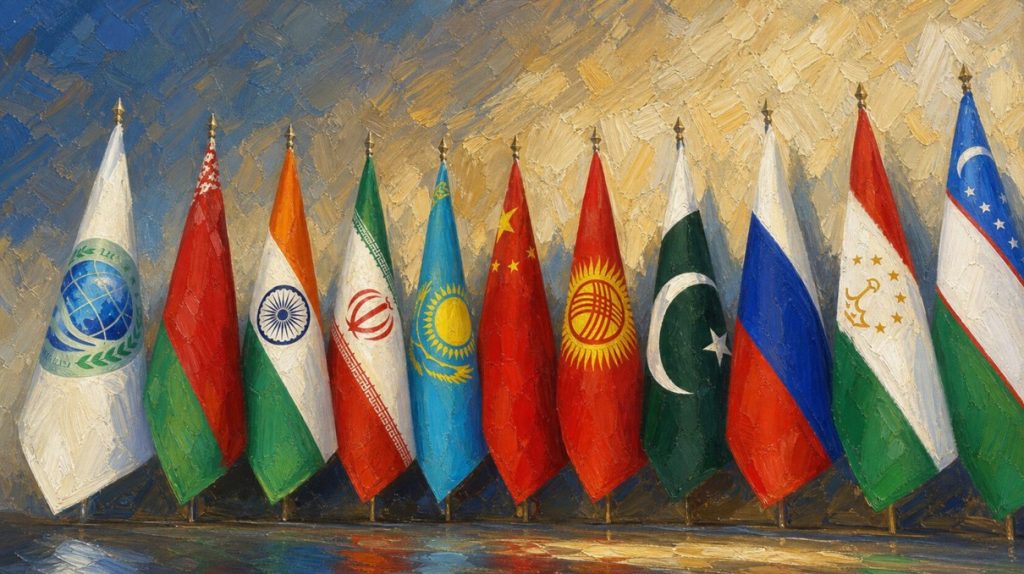
In the context of the ongoing transformation of the international system and the growing importance of regional cooperation formats, the Shanghai Cooperation Organization is entering a new stage of institutional development. Over 25 years, the SCO has evolved from a mechanism for building trust and ensuring security into a multilateral structure with a broad economic, transport, technological, and humanitarian agenda.
The next important stage in this process will be the meeting of the Council of Heads of Government of the SCO member states, which will take place on October 19-20, 2026, in Dushanbe. Preparations for the meeting are already being considered within the Organization’s relevant mechanisms, alongside issues of intensifying practical cooperation in the political, trade-economic, cultural, and humanitarian spheres.
A distinctive feature of the upcoming meeting is that it is taking place after the September SCO summit of heads of state in Bishkek, where the benchmarks for the Organization’s further development were outlined. In this regard, the task of practical implementation of political decisions, including the development of trade, transport connectivity, investment, the digital economy, and technological cooperation, is now moving to the level of heads of government.
China in the modern SCO architecture
Since the SCO was founded, China has remained one of the most active participants in shaping its institutional and practical agenda. As a founding state of the Organization and the host country of its permanent Secretariat, the PRC views the SCO as one of the priority areas of its diplomacy toward neighboring states. This position is officially confirmed by the Chinese side, which links activity within the Organization to issues of regional security, trade and investment, financial interaction, infrastructure development, and humanitarian contacts.
At the same time, the SCO’s specificity lies in its consensus-based model. Decisions are made on the basis of agreement among all member states, which objectively limits the possibility of unilateral agenda-setting and requires the search for mutually acceptable approaches. Against this backdrop, China’s role is manifested primarily through the initiation of new areas of cooperation, the creation of applied mechanisms, and the provision of additional opportunities for implementing joint projects.
A notable impetus to this direction was given by the PRC’s chairmanship of the SCO in 2024-2025 and the holding of the Tianjin Summit in September 2025. It was at this stage that the strategic framework for the Organization’s development over the next decade was formed. The adopted SCO Development Strategy until 2035 today serves as one of the main documents defining the further development of economic and other areas of cooperation.
After the chairmanship ended, China continued the practical implementation of the proposed initiatives. According to official data from the PRC Ministry of Foreign Affairs, by July 2026 seven cooperation platforms had been launched in the areas of green industry, the digital economy, scientific and technological innovation, energy, higher education, vocational training, and artificial intelligence. On this basis, more than 160 projects have been formed.
Thus, there is a gradual expansion of China’s participation from the security issues traditionally associated with the SCO toward economic and technological cooperation. Moreover, this is not only about large-scale infrastructure initiatives, but also about the formation of specialized platforms focused on specific sectors.
This line was continued at the Bishkek Summit on September 1, 2026. PRC President Xi Jinping outlined the need to strengthen cooperation both in traditional areas—trade, investment, energy, and transport connectivity – and in new sectors, including artificial intelligence, the digital economy, and green industry.
The Chinese side announced plans to jointly develop with SCO states an International Center for Cooperation on the Application of Artificial Intelligence, to establish a China-SCO Center for Economic Cooperation at border checkpoints in Tianjin, and to implement 100 scientific and technological cooperation projects over the next three years. Separate support was also expressed for improving the efficiency of the Trans-Caspian International Transport Route.
The latter direction is of particular interest to Kazakhstan, as it makes it possible to view Chinese initiatives in the SCO not in isolation, but in the context of forming a broader system of Eurasian transport connectivity.
Kazakhstan and China: from bilateral interaction to multilateral cooperation
Kazakhstan and China are not only founding states of the SCO, but also neighboring countries with significant practical experience of cooperation in trade, transport, investment, and cross-border infrastructure. In this context, bilateral interaction can serve as one of the applied elements of the Organization’s broader economic agenda.
This is especially evident in the transport and logistics sphere. According to the results of the first half of 2026, the volume of rail freight transportation between Kazakhstan and China reached 18.7 million tons, up 9% compared with the same period last year. Export shipments from Kazakhstan to China also showed positive dynamics. At the same time, the development of border infrastructure and the construction of the Bakhty-Ayagoz railway line continue, which is expected to form the third railway crossing between the two countries.
In a broader sense, cooperation between Kazakhstan and China is gradually encompassing a network of routes connecting the Chinese economy with Central Asia, the Caspian region, and further with European markets. In this regard, the Trans-Caspian International Transport Route is gaining additional importance, since its development is supported not only at the bilateral level but is also being included in a broader discussion of the SCO transport agenda.
At the same time, transport infrastructure alone does not ensure the formation of full-fledged economic connectivity. Equally important is the alignment of administrative and digital mechanisms—customs procedures, electronic document flow, control systems, and trade standards.
This is precisely the direction Kazakhstan has been consistently promoting. In September 2026, at a meeting of ministers of SCO member states responsible for foreign economic and foreign trade activities, the Kazakh side advocated further development of paperless and electronic trade, the digitalization of trade procedures, and mutual recognition of electronic documents. As a result of the meeting, an Action Plan for 2026-2030 for the implementation of the Program of Multilateral Trade and Economic Cooperation of SCO member states was agreed, which is expected to be submitted for approval by the Council of Heads of Government.
In this regard, the upcoming meeting in Dushanbe is of practical importance for Kazakhstan. It is an opportunity to advance those areas that simultaneously correspond to national economic interests and the SCO’s overall agenda: improving transport connectivity, simplifying trade procedures, developing digital solutions, and creating more favorable conditions for cross-border business.
China, with its large domestic market, production base, and technological capabilities, objectively remains one of Kazakhstan’s main economic partners in implementing such projects. According to official data from the Government of the Republic of Kazakhstan, in 2025 bilateral trade exceeded $48 billion, and the volume of rail freight transportation between the two countries reached 35.6 million tons. At the same time, the sides continue to expand cooperation in investment, agriculture, and the transport and logistics sector.
Against this backdrop, Kazakhstan-China interaction can be seen as one of the practical models for implementing the SCO’s broader economic agenda. However, its significance for the Organization will depend on how successfully bilateral experience can be transformed into multilateral solutions that are accessible and beneficial to other participants.
Practical effectiveness as the main challenge
Over the past few years, the institutional structure of SCO economic cooperation has expanded significantly. Within the Organization, mechanisms of interaction operate in the areas of trade, investment, finance, transport, energy, agriculture, e-commerce, customs cooperation, and the development of transit potential.
At the same time, an increase in the number of mechanisms does not automatically mean deeper economic integration. SCO states differ in the scale of their economies, the structure of their foreign trade, participation in other integration associations, and national regulation. Moreover, the Organization itself does not imply a supranational model of governance, retaining its interstate and consensus-based nature. As a result, one of the main questions is not so much further expansion of the agenda as improving the effectiveness of existing mechanisms.
Against this backdrop, several promising areas for further development can be identified. First and foremost, simplifying trade procedures remains relevant. The digitalization of customs interaction, mutual recognition of electronic documents, and the consistent removal of administrative barriers can deliver a faster practical effect than attempts to force a move toward deep integration formats.
The second area is transport connectivity. For the SCO space, which covers a significant part of Eurasia, the alignment of different corridors and the increase in the throughput capacity of border infrastructure are of particular importance. In this context, Kazakhstan can retain its function as one of the key transit hubs, while China’s participation provides additional freight, investment, and technological potential.
The third area is technological cooperation. The launch by the Chinese side of specialized platforms in the fields of the digital economy, artificial intelligence, and scientific and technological innovation creates an additional institutional basis for interaction. At the same time, the further effectiveness of such mechanisms will be determined not by the number of announced projects, but by the degree of involvement of member states, their practical returns, and the ability to take into account the varying levels of technological development among participants.
Finally, the task of maintaining the SCO’s internal balance remains. The Organization’s expansion objectively complicates the process of reconciling interests, but at the same time increases its economic and political potential. That is why the consensus principle, on the one hand, may slow decision-making, but on the other, remains an important guarantee of equal participation for all states.
In the near future, the effectiveness of the SCO will largely depend on its ability to translate the strategic guidelines of recent years into a system of implementable projects. The 2026 Bishkek Declaration confirmed the member states’ intention to consistently carry out the tasks of the SCO Development Strategy for 2026-2035, which creates a long-term basis for the further institutionalization of cooperation.
In this process, China will likely continue to play an active role thanks to the scale of its economy, technological capabilities, and the large number of cooperation mechanisms it proposes. At the same time, the practical sustainability of Chinese initiatives directly depends on their alignment with the national priorities of other states and their subsequent incorporation into the Organization’s collective mechanisms.
For Kazakhstan, a pragmatic approach remains optimal, in which cooperation with China within the SCO complements rather than replaces the multilateral agenda. Of particular interest are projects that make it possible to leverage the country’s geographic position while also creating additional economic value—development of transport and logistics hubs, digitalization of trade, industrial cooperation, and the introduction of new technologies.
Thus, the upcoming meeting of the Council of Heads of Government in Dushanbe will be another test of the SCO’s ability to move from setting strategic directions to their practical implementation. At this stage, the most promising approach appears not to be accelerating integration as an end in itself, but the consistent development of those areas where the interests of member states already overlap to a significant degree.
In this context, China’s role lies primarily in providing additional economic, infrastructure, and technological opportunities for joint projects, while Kazakhstan can serve as one of the connecting elements between the Chinese direction, Central Asia, and broader Eurasian transport and economic processes.
It is precisely the combination of national interests, mutually beneficial projects, and consensus mechanisms that will, in the long term, determine the SCO’s ability to strengthen its significance as a sustainable platform for practical cooperation across the Eurasian space.
Photo: eurasian-guild.com
China Studies Center