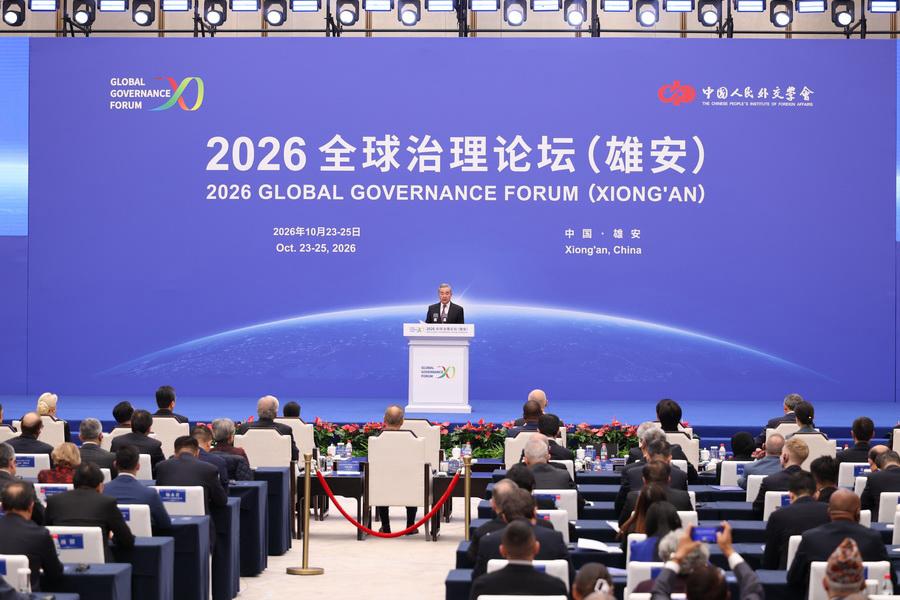
China Studies Center (Kazakhstan) took part in the international 2026 Global Governance Forum, held on October 23–25 in the Xiong’an New Area of Hebei Province, China.
The forum served as an international expert and diplomatic platform for discussing prospects for improving the global governance system, strengthening multilateral institutions, and shaping cooperation mechanisms that respond to changes in the world economy, international relations, and technological development.
Organized by the Chinese People’s Institute of Foreign Affairs (CPIFA), the forum brought together representatives of government bodies, international organizations, research centers, and the expert community from various countries.
The discussions focused on the effectiveness of international institutions, the role of the United Nations, the expansion of developing countries’ participation in global decision-making, and the improvement of governance mechanisms in new areas, including artificial intelligence.
One of the key events of the forum was the opening ceremony on October 23, at which Wang Yi, a member of the Political Bureau of the CPC Central Committee and China’s Foreign Minister, read out a message from Chinese President Xi Jinping and delivered a keynote speech.
Xi Jinping’s address placed special emphasis on the need to strengthen international trust, develop cooperation, and improve global governance mechanisms in the interests of all states.
These provisions develop the Global Governance Initiative (GGI), proposed by China’s leadership in 2025.
The initiative is based on five principles: sovereign equality of states, observance of international law, commitment to multilateralism, a people-centered approach, and practical action.
The Chinese side proceeds from the view that the existing international system does not need to abandon its foundational institutions, but rather to improve their effectiveness, representativeness, and ability to respond to contemporary challenges.
In his keynote speech, Wang Yi outlined priorities for reforming global governance, including strengthening the central role of the UN, observing international law, expanding the representation of Global South countries, supporting an open world economy, and improving international mechanisms for regulating new technologies.
Particular attention was given to moving from discussion of general principles to concrete institutional solutions.
Wang Yi announced eight practical measures by the Chinese side aimed at helping form a fairer and more rational system of global governance.
Among them, an important place is occupied by international cooperation in the field of artificial intelligence, which China views both as a source of new opportunities for development and as one of the most complex areas of international regulation.
Global governance and technological development
One of the substantive features of the forum was the consideration of artificial intelligence in the context of the broader reform of the international system.
The development of AI is changing not only the technological capabilities of states, but also the conditions of their economic competitiveness, scientific development, and participation in international relations.
At the same time, technological resources are distributed extremely unevenly. A significant share of computing power, investment, advanced models, and research expertise is concentrated in a limited number of states and companies.
As a result, a new global governance problem is emerging: countries that do not have sufficient technological infrastructure risk becoming dependent on external providers of digital solutions while also having limited opportunities to influence the development of international rules.
Against this backdrop, the Chinese side pays special attention to building the capacity of developing countries, ensuring access to technologies, training specialists, and developing open technological ecosystems.
A practical reflection of this approach was the presentation at the forum of the Report on the Progress of the Inclusive Artificial Intelligence Capacity-Building Program.
On October 24, the main provisions of the document were presented by Chen Zhimin, Vice President of Fudan University and Executive Director of the Global Innovation Governance Center for Artificial Intelligence.
The report summarizes two years of implementation of the program proposed by China in 2024 and examines specific projects in computing infrastructure, education, industrial AI applications, data governance, and technological security.
The presentation of this document demonstrates the Chinese side’s desire to complement political initiatives with practical mechanisms for international cooperation.
The forum was attended by the Director of China Studies Center, G. Shaimergenova. As part of the forum’s expert program, she took part in discussions on global governance, international cooperation, and the improvement of human rights protection mechanisms.
Particular significance was attached to the thematic discussion “New Horizons for Global Human Rights Governance.”
For Kazakhstan, this issue is of interest from the perspective of developing international dialogue, increasing the effectiveness of multilateral institutions, and seeking coordinated approaches to ensuring human rights in the context of technological and socio-economic change.
The contemporary human rights agenda is increasingly closely linked to issues of sustainable development, digital inequality, access to education and technology, protection of personal data, and ensuring the fair participation of various population groups in economic transformation.
In this context, discussion of global governance in the field of human rights acquires an additional dimension related to the need to take into account the consequences of digital transformation and the introduction of artificial intelligence.
The Center’s participation in the forum also made it possible to examine Chinese initiatives from the perspective of Kazakhstan’s and Central Asia’s interests, including issues of international institutional coordination, technological cooperation, and the expansion of expert dialogue.
Significance for Kazakhstan and Central Asia
For the states of Central Asia, reforming global governance has several interconnected dimensions.
First and foremost, it concerns increasing the representation and participation opportunities of medium and small states in international institutions.
Kazakhstan consistently supports multilateral diplomacy, the central role of the UN, the peaceful settlement of international disputes, and the development of constructive interaction between states.
In this regard, proposals aimed at improving the effectiveness of international organizations and expanding the participation of developing countries in shaping the global agenda are of particular interest.
The second direction is linked to economic and technological development.
For Central Asia, it is fundamentally important to be able to participate in international production, transport, and digital chains not only as a supplier of resources or consumer of ready-made technologies, but also as a partner with its own competencies.
Issues of access to computing resources, the development of national artificial intelligence models, workforce training, and the protection of digital sovereignty are becoming part of the long-term regional cooperation agenda.
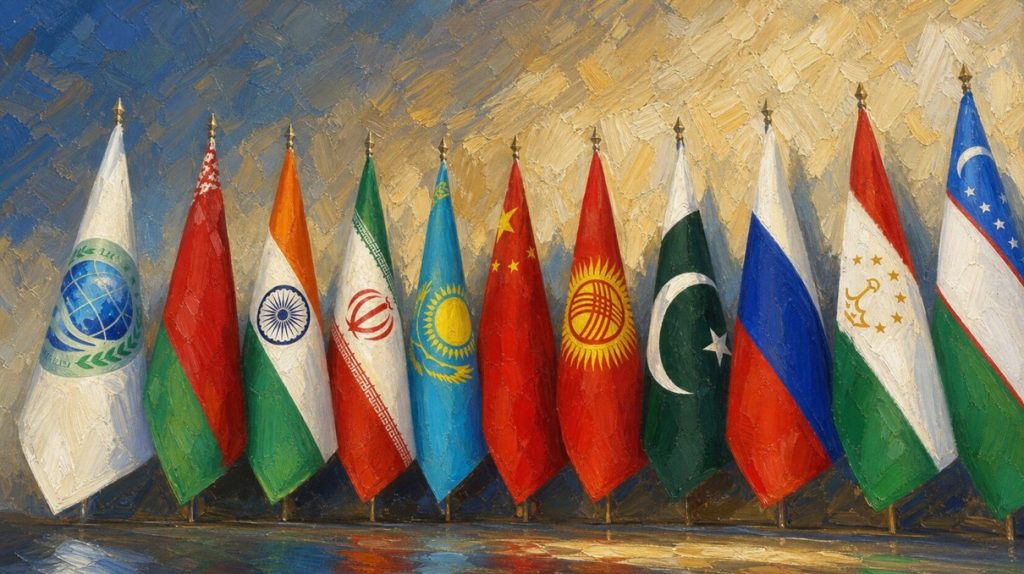
The third direction concerns the interaction of existing multilateral mechanisms. The UN, the Shanghai Cooperation Organization, the “Central Asia – China” format, and other regional platforms can perform complementary functions in developing dialogue on digital economy, technological security, and sustainable development.
At the same time, the effectiveness of such mechanisms will be determined not by the number of initiatives put forward, but by the possibility of their practical implementation, the availability of sustainable funding, and measurable results of cooperation.
From international dialogue to institutional results
The 2026 Global Governance Forum demonstrated the expansion of China’s international cooperation agenda, in which issues of reforming international institutions are increasingly closely linked with economic development, technological transformation, and the management of new global risks.
An important feature of this approach is the desire to supplement political principles with concrete mechanisms, research platforms, and practical cooperation programs.
At the same time, the further effectiveness of the proposed initiatives will depend on the degree of their international support, the transparency of implementation mechanisms, and the ability to take into account the interests of states with different levels of development.
For Kazakhstan, participation in such international discussions provides an opportunity not only to study new approaches to global governance, but also to formulate its own expert proposals based on national interests and regional cooperation priorities.
The Kazakhstan China Studies Center will continue to study Chinese initiatives in the field of global governance, paying special attention to their institutional development and practical significance for Kazakhstan and Central Asia.
China Studies Center