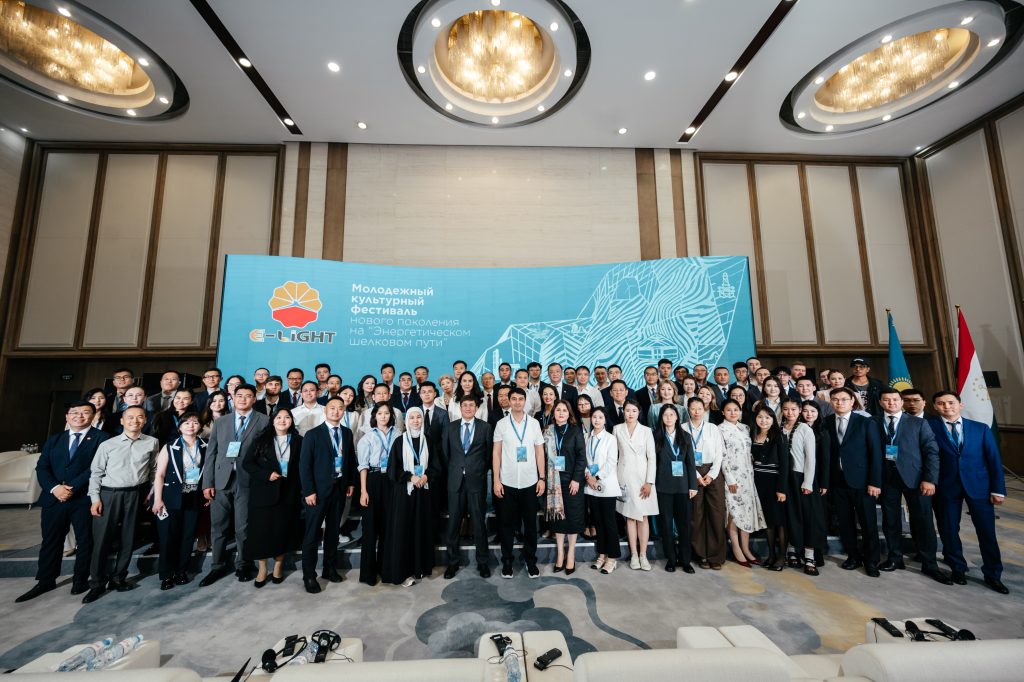
On June 10, 2026, the International Youth Cultural Festival E-LIGHT “A New Generation Youth Cultural Festival on the Energy Silk Road” was held in Astana. The event brought together representatives of youth, the expert community, and major energy companies from Kazakhstan, China, Kyrgyzstan, Turkmenistan, Tajikistan, and Uzbekistan.
The forum was organized by CNPC Central Asia Ltd. with the support of co-organizer CNPC Kazakhstan, the Embassy of the PRC in the Republic of Kazakhstan, the China Chamber of Commerce, and the Kazakh National Academy of Choreography. The date of the event coincided with the International Day of Dialogue among Civilizations, established by a UN General Assembly resolution.
The forum brought together young professionals, students from specialized universities, representatives of government bodies, business, the scientific and expert community, and professional associations interested in the development of energy, modern technologies, and dialogue between the youth of China and Central Asian countries.
The forum opened with an exhibition that visually traced the connection between energy corridors and the historical routes of the Silk Road. The concert program built a cultural bridge between Kazakh and Turkmen traditions: the dombra and the national instrument savurden sounded together in a single space.
The E-LIGHT 2026 program was dedicated to issues of the Energy Silk Road, deepening cooperation between China and Central Asia, and the role of the new generation of specialists in shaping a sustainable and digital energy future. Throughout the day, participants discussed the Belt and Road agenda in energy, industry trends, digitalization and the ESG agenda, as well as practical aspects of training personnel for the oil and gas and energy sectors.
The official part of the forum opened with welcoming remarks from representatives of CNPC and partner organizations, who emphasized the significance of the youth dimension of cooperation between China and the Central Asian states, as well as the importance of sustainable energy solutions amid global transformations. It was noted that E-LIGHT 2026 is intended to become a permanent platform for exchanging experience, seeking innovation, and building networking ties among young engineers, researchers, and managers in the region.
“All the sessions of today’s event are aimed at the younger generation, new interaction, and new dialogues. Through innovations in the energy sector, we will discuss how to jointly develop digital cooperation within the framework of the Belt and Road Initiative. Our company hopes that this forum will help deepen interaction between the youth of the two countries and become a platform for new joint initiatives,” said Li Shufeng, President of CNPC Central Asia Ltd.
“The main goal of holding a youth forum is to strengthen cooperation between young people from different states and regions. Such platforms allow young people to discuss common issues and develop joint initiatives,” added Gao Bin, Deputy General Director of CNPC Central Asia.
Panel Sessions
Session I. “The New Silk Road: The Mission of an Era” an expert discussion on the role of the Belt and Road Initiative in shaping a new architecture of international relations. Speakers included G. Shaimergenova, Director of the China Studies Center; representatives of Kyrgyzstan, Turkmenistan, and Kazakhstan, as well as a young diplomat from the Embassy of the PRC in the Republic of Kazakhstan.
Speaking at this session, G. Shaimergenova, Director of the China Studies Center, focused on the strategic dynamics of China-Central Asia cooperation and the role of youth in giving it real substance. She noted that in recent years the China-Central Asia format has evolved from a predominantly infrastructure-focused agenda into a more comprehensive model of interaction that includes science, education, the digital economy, and green solutions, and she emphasized the need to involve young specialists in the development and implementation of joint projects.
The Director of the Center paid particular attention to the quantitative parameters of interaction, the growth in trade turnover, the expansion of investment projects, and the deepening participation of Central Asian countries in initiatives under the Belt and Road, stressing that behind the dry figures (growth in bilateral trade, an increase in the number of joint ventures and educational programs) lie real career opportunities for the region’s younger generation in energy, logistics, digital technologies, and the creative economy. She urged forum participants to see themselves not as passive beneficiaries but as co-authors of the future architecture of China-Central Asia cooperation, noting that specialists combining language skills, an understanding of the political and economic context, data-handling abilities, and ESG approaches, as well as readiness for ongoing dialogue with partners on both sides of the border, will be in demand. In closing, the Director emphasized the importance of youth platforms such as E-LIGHT 2026 for building long-term networks of trust and professional interaction among young leaders from Kazakhstan, China, and the entire Central Asian region.
Session II. “Unity of Knowledge and Practice: Youth Growth” – a discussion on personnel training and the professional trajectories of young specialists. Representatives of QazaqGaz and Beijing Language and Culture University joined the dialogue. The second block discussed personnel training, the role of universities and corporate talent development programs, as well as prospects for youth exchanges and internships at CNPC enterprises and its partners in Kazakhstan and the region. Special attention was paid to the development of competencies in ICT, data analysis, ESG management, as well as fostering intercultural communication skills and the ability to work in transnational companies among young people.
Session III. “Scientific and Technical Innovations: Industry Transformation” – an analysis of technological trends changing the face of energy. Participants included representatives of Huawei, QazaqGaz, Kazenergy, and Western Drilling. The third block of the forum was devoted to digitalization and innovation in energy, including the use of big data, automation, intelligent control systems, and new digital services for the industry. Representatives of technology companies and young research teams presented their solutions and initiatives related to improving the efficiency of energy resource extraction and transportation, monitoring environmental parameters, and enhancing industrial safety.
Session IV. “The Energy Silk Road: Global Stability” – an analysis of the role of energy corridors in the sustainable development of the region. The discussion involved KazMunayGas, QazaqGaz, CNPC-Aktobemunaygaz, PetroChina International, and POWERCHINA.
Session V. “Digital Creation: Cultural Identity” – a discussion of the role of digital technologies in preserving and transmitting cultural heritage. Participants: the Ministry of Culture and Information of the Republic of Kazakhstan, the Kazakh National Academy of Choreography, and the CNPC representative office in Tajikistan.
The culmination of the forum was the adoption of the E-LIGHT Youth Initiative – a document formalizing the participants’ commitments to developing international cooperation in the fields of energy, technology, and cultural dialogue. The initiative recorded the readiness of young representatives from different countries to jointly advance the agenda of sustainable development and humanitarian exchange.
The forum’s cultural and educational program was complemented by creative performances, an introduction to the “energy traces of the Silk Road,” and informal networking, which helped strengthen horizontal ties among young leaders, engineers, and researchers from Kazakhstan, China, and other Central Asian countries. Following the event, the organizers expressed their intention to continue developing the E-LIGHT format as a regular platform for youth energy diplomacy and practical cooperation in the China-Central Asia space.
The E-LIGHT forum took place in the year of cultural exchange between Kazakhstan and China. Its holding underscored that the energy partnership between China and the Central Asian countries is today moving beyond infrastructure projects – the human dimension is increasingly coming to the forefront of the agenda: education, professional growth, and value-based dialogue of the new generation.
China Studies Center