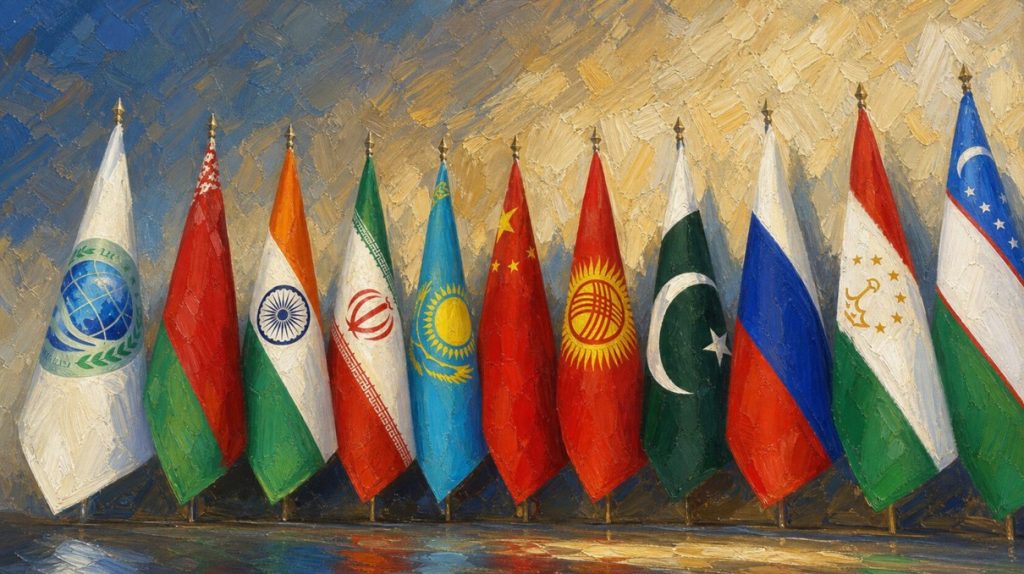
The development of artificial intelligence is becoming a key factor in the global competitiveness of states in the 21st century. Today, AI already determines the effectiveness of economic management, the security of digital ecosystems, labor productivity, and the quality of life of the population. According to McKinsey, AI’s contribution to the global economy by 2030 could reach up to $20 trillion. [1].
For Central Asia and Kazakhstan, the development of AI is a strategic direction directly linked to the implementation of digital transformation tasks, strengthening technological sovereignty, and increasing economic resilience. In his Address to the People of Kazakhstan on September 8, 2025, President of the Republic of Kazakhstan K. Tokayev noted that “On the basis of large-scale digitalization and the active introduction of artificial intelligence technology, we must carry out the modernization of the economy” [2].
Of particular importance for the region is the development of partnership with the PRC, which is one of the world leaders in artificial intelligence. Within the framework of the Belt and Road Initiative, China is actively promoting the concept of the Digital Silk Road, which includes cross-border projects in telecommunications, cloud computing, automation, and intelligent systems. For Central Asian countries, participation in these initiatives opens up new opportunities for technology exchange, investment attraction, and the creation of innovative infrastructure.
The state and trends in AI development in Central Asia
In recent years, the countries of Central Asia have shown a clear trend toward the institutionalization of the digital agenda and the strengthening of regional cooperation in the technology sector. Despite differences in the level of economic development and technological infrastructure, the states of the region are gradually recognizing the strategic importance of artificial intelligence as a tool for economic modernization, optimization of public administration, and diversification of growth sources.
Kazakhstan, according to international digital readiness indices, is the leader in Central Asia in the development of artificial intelligence [3,4]. The country has the most extensive institutional structure, legal framework, and infrastructure, making it a hub for digital initiatives in the region. In addition, the country has adopted the Law “On Artificial Intelligence” [5].
Uzbekistan is also demonstrating notable progress, actively developing IT parks and forming a regulatory framework for the regulation of AI solutions in the public sector.
Kyrgyzstan and Tajikistan are at earlier stages of building an AI ecosystem, so far limiting themselves to the introduction of individual digital services related to document workflow automation, transport flow management, and the development of e-government systems. Turkmenistan maintains a relatively closed digital policy, but in 2024 it also announced its intention to develop smart cities and introduce AI into transport and energy infrastructure [5]. Thus, one can speak of the formation of a digital transformation landscape in which Kazakhstan and Uzbekistan act as drivers, while the other states are beginning to adapt their experience.
The development of educational and human-capital initiatives is of particular interest. The states of the region are actively developing school and university programs in AI and machine learning, opening IT laboratories and technoparks that are becoming centers of attraction for young researchers and entrepreneurs [6]. At the same time, there is a trend toward expanding international academic cooperation — universities in Central Asian countries are actively establishing partnerships with foreign universities and advanced IT companies.
An important direction is the formation of regional cooperation in digital technologies. At the level of the governments of Kazakhstan, Uzbekistan, and Kyrgyzstan, issues of digital cooperation are being discussed, focused on data exchange, the development of joint educational programs in IT, and the formation of common cybersecurity standards.
At the same time, the combination of institutional experience, developed infrastructure, and international partnerships allows Kazakhstan to claim the role of a regional center of digital leadership in Central Asia. Unlike its neighbors, the country already has a developed system of accelerators, national competence centers, and support from international corporations. For example, the international forum Digital Bridge, held annually in Astana, has become a key regional and global platform bringing together representatives of governments, international organizations, and business.
Thus, President of the Republic of Kazakhstan K. Tokayev, speaking at the international forum Digital Bridge 2025, stated that “Today, Digital Bridge has become an important platform for exchanging views and advancing important initiatives on the future of the digital economy and global transformation. Since its inception, more than 67 thousand people, over 500 IT companies, and delegations from 100 countries have taken part in the Forum. Kazakhstan, as the main digital hub of the Eurasian space, will continue this most important work in the future” [7].
In addition, Kazakhstan can act as an intermediary between Central Asia and external technological centers, above all China. The country’s geographic location, developed transport and logistics infrastructure, and participation in the Belt and Road Initiative create unique opportunities for cross-border digital corridors and data exchange. The formation of a unified regional artificial intelligence space, coordinated by Kazakhstan, could become one of the directions for deepening regional integration.
Thus, the development of artificial intelligence in Central Asia is becoming a key element of regional modernization and strengthening technological sovereignty. Kazakhstan, possessing the most mature digital infrastructure and institutional base, acts as a natural leader and coordinator of regional initiatives in this area. The country’s experience in creating innovative ecosystems, supporting startups, and international partnerships demonstrates the potential for forming a region-wide AI platform capable of uniting the efforts of Central Asian states in scientific, technological, and educational development.
Forms and prospects of Central Asia–PRC cooperation in AI
The development of cooperation between Central Asian states and the PRC in the field of artificial intelligence appears to be a strategically important direction, given China’s growing role as one of the world leaders in this field and the region’s interest in accelerating digital transformation. In the context of the Belt and Road Initiative and deepening economic integration in Central Asia, cooperation in AI is becoming a new growth point in bilateral and multilateral relations, ensuring mutually beneficial exchange of technologies, personnel, and scientific expertise.
Cooperation between China and the countries of Central Asia in the field of artificial intelligence is developing in line with the Digital Silk Road concept, which is the technological dimension of the Belt and Road Initiative. Thus, cooperation in AI with China has been built along several key directions. First of all, this is the creation of joint research centers and laboratories on the basis of leading universities. These centers could specialize in the application of AI in areas that are priorities for the region (energy, transport, agriculture, water resource management, and public administration). For example, the use of machine learning and big data analytics can improve the efficiency of natural resource management and enhance climate risk forecasting. An example is the signing by the National Academy of Sciences of the Republic of Kazakhstan of a memorandum with Zhejiang University of Technology, within the framework of which an International Joint Laboratory of Spatiotemporal Artificial Intelligence and Sustainable Development will be created [8].
The second direction is the development of human capital through educational and academic exchanges. China is actively developing programs for training specialists in AI, including state grants for foreign students and joint courses with leading technology corporations (for example, Huawei) [9, 10].
The third direction is industrial and commercial cooperation. Central Asia serves as a pilot platform for testing Chinese solutions in smart cities, security systems, and urban infrastructure management. In this context, the development of technoparks and innovation hubs capable of integrating startups from both countries into common technological chains is of particular importance. The implementation of such projects will allow Central Asian countries not only to attract investment, but also to develop their own export-oriented solutions adapted to the needs of Central Asia.
In the future, it is important to consider the creation of joint investment funds aimed at financing startups and research projects in AI. China has significant financial resources and experience in scaling innovations, while the Central Asian states, in turn, offer favorable conditions for the localization and testing of technologies. Such funds could support projects focused on the development of applied solutions in energy, ecology, and logistics.
Interaction in the field of regulatory governance and AI ethics is also promising. China has extensive experience in developing standards for artificial intelligence governance, including mechanisms to ensure algorithm transparency and data protection. The states of the region can adopt these practices, taking national specificities into account, and in cooperation with Chinese regulators and expert communities develop recommendations for forming an ethical infrastructure for the use of AI. This is especially important in the context of state digitalization and ensuring citizens’ trust in automated management systems.
In addition, cooperation with China can be strengthened within multilateral platforms such as the Shanghai Cooperation Organization and the C5+1 mechanism. These platforms provide an opportunity to coordinate efforts in scientific research, data exchange, and the introduction of innovative standards.
Thus, the development of cooperation with China in the field of AI has the potential not only to accelerate technological progress in Central Asia, but also to form a regional center of competence in the region. This cooperation should be built on the principles of mutual benefit, openness, and consideration of national interests, ensuring a balance between technological modernization and sovereignty in data and infrastructure management.
Risks and recommendations
Despite the high potential for cooperation with China in the field of artificial intelligence, Central Asia faces a number of risks and challenges that could limit the effectiveness of state policy implementation in this area. These risks cover technological, institutional, legal, and geopolitical aspects that require comprehensive analysis and the development of management mechanisms.
First, a key challenge is technological dependence on foreign solutions and platforms. At present, Central Asian countries rely heavily on imported software products, computing power, and cloud infrastructure. This creates a risk of vulnerability for the national digital ecosystem to external restrictions and cyber threats.
Second, there is a shortage of human capital and research infrastructure. The level of training of specialists in machine learning, data processing, and cybersecurity remains limited. The shortage of personnel leads to slower AI implementation in the public sector and business, as well as dependence on foreign experts.
The third risk is related to cybersecurity and data protection threats. The expanding use of AI in transport management, energy, and public services increases the likelihood of cyberattacks, leaks of personal information, and manipulation of decision-making algorithms.
The fourth challenge is geoeconomic in nature. In the context of growing international competition in AI, Central Asian countries need to maintain a balance between the interests of various partners and avoid becoming involved in technological blocs that could limit access to alternative sources of technology. For example, excessive reliance on Chinese platforms in the absence of diversification may cause concern among Western partners and investors, especially in the context of discussions about ethical and legal standards for the use of AI.
Finally, an important challenge is the ethical and social dimension of AI application. The growth of automation and the introduction of decision-making algorithms in the economy and public administration create risks for employment, social justice, and citizens’ rights. Without mechanisms to control algorithmic fairness and the transparency of their application, public distrust and resistance to digital reforms may grow. “We must take effective measures to ensure that technologies do not exacerbate social inequality and are not used as a tool to manipulate the behavior and choices of citizens”, said President of the Republic of Kazakhstan K. Tokayev [7].
Thus, the development of AI and the deepening of cooperation with the PRC open up significant opportunities for the technological development of Central Asian countries, but they are also accompanied by risks that, in the absence of a well-thought-out management strategy, may lead to technological dependence, loss of digital sovereignty, and a narrowing of the space for independent innovation. To mitigate these risks, it is necessary to:
strengthen strategic planning and institutional coordination in the field of AI, including specific indicators, financing mechanisms, and monitoring. To implement the strategy, it is possible to establish a specialized state body (for example, in Kazakhstan, the Ministry of Artificial Intelligence and Digital Development has been created);
develop and adopt a long-term competency development program, including updating educational standards, stimulating research, and integrating universities into international academic networks. It is beneficial for Central Asian states to use the potential of leading Chinese universities and corporations to create advanced training programs for local specialists, building a human-resource base for the long-term development of the industry;
develop data infrastructure and computing capacity. The states of the region should encourage the creation of national data centers, cloud platforms, and open databases compatible with international standards (for example, a supercomputer cluster has been assembled in Kazakhstan). At the same time, cooperation with China may include joint investments in supercomputers, distributed computing networks, and the exchange of experience in energy-efficient data centers. Such an approach will ensure the digital sovereignty of the region;
strengthen cybersecurity and data protection. Within the framework of cooperation with China, Central Asian states should continue to develop standards for the secure storage and transfer of data, as well as conduct joint exercises to counter cyber threats in the field of AI;
increase public awareness and trust in AI technologies. To this end, it is worth implementing educational programs aimed at fostering digital culture, developing data-handling skills, and improving users’ ethical literacy. In this regard, the development of AI should be accompanied by ongoing public dialogue, transparency, and responsible use of technologies;
form a regional platform for experience exchange and cooperation in the field of AI in Central Asia. Kazakhstan could take the initiative to create a Regional Center for Cooperation on Artificial Intelligence between Central Asia and China, which would be engaged in the implementation of joint research projects, personnel training, and the exchange of best practices. This would not only strengthen Kazakhstan’s position as the technological leader of the region, but also contribute to the development of a unified position of Central Asian countries on AI regulation issues.
The practical implementation of the proposed recommendations will minimize technological risks and build a sustainable partnership with China based on the principles of mutual respect, transparency, and strategic trust, and will also help strengthen Kazakhstan’s position in the global artificial intelligence ecosystem.
Conclusion
The development of artificial intelligence in Kazakhstan and the countries of Central Asia is becoming one of the key factors in shaping a new economic model based on knowledge, innovation, and digital technologies. For the region, AI represents not only a technological tool for economic modernization, but also a strategic resource capable of increasing the effectiveness of public administration, labor productivity, and the quality of life of the population.
Kazakhstan and Uzbekistan already have significant potential for AI development, with developed digital infrastructure and e-government systems, a growing number of startups, and research centers. However, the other states of the region lag significantly behind in the development of AI.
At the same time, amid intensifying global competition in AI and technological rivalry among world powers, countries need to strengthen their own competencies and institutional mechanisms. The main challenge remains the need to balance openness to international cooperation with the protection of national interests, including data security, human capital, and the preservation of technological independence.
Of particular importance in this context is cooperation with the PRC, which is a world leader in AI and digital technologies. Partnership with China opens up broad opportunities for the region, including access to advanced technologies, investments, research platforms, and educational programs. However, this cooperation should be built on the principles of mutual benefit, transparency, and equality, taking into account the strategic interests of the region and the need to diversify international partners. It is important that cooperation in AI not be reduced merely to importing technologies, but rather contribute to the formation of its own research and production base.
China Studies Center
Photo: Dalle-3
List of sources used: