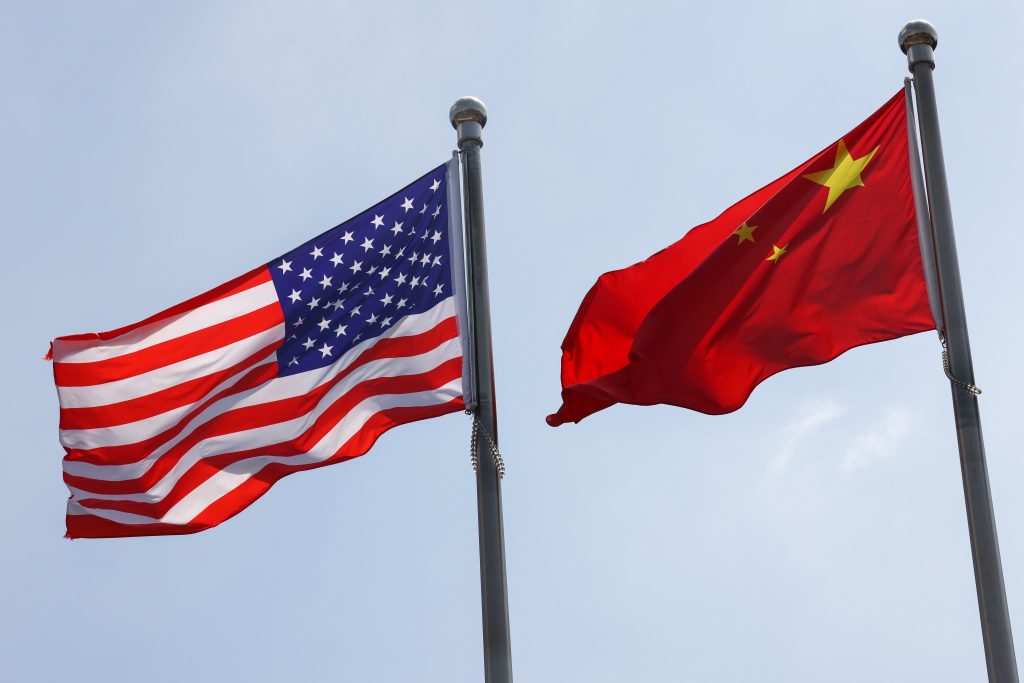
On September 23, Xi Jinping arrived in the United States accompanied by Peng Liyuan, member of the Standing Committee of the Political Bureau of the CPC Central Committee Cai Qi, and Foreign Minister Wang Yi. The visit will last until September 25.
Even the first elements of the program draw attention. U.S. President Donald Trump personally greeted Xi Jinping at Andrews Air Force Base. A large-scale official ceremony has been prepared for the state visit at the White House on September 24, after which talks and a state dinner will take place. A separate tea meeting and a visit to the U.S. National Archives are scheduled for September 25.
Protocol in this case has political significance. It shows that both sides, despite continuing serious differences, attach special weight to direct interaction between the leaders. However, precisely for that reason, the current visit should be assessed not only by its ceremonial component and not only by any possible statements issued at its conclusion.
The main question is different: can the agreements reached at the highest level receive a more durable institutional continuation?
The May consensus and its further implementation
In May this year, Donald Trump paid a state visit to China. Following the talks in Beijing, the bilateral dialogue закрепed the formula of “constructive strategic stability.” In the Chinese interpretation, this implies cooperation as the main direction of interaction, competition within certain limits, management of differences, and preservation of a long-term outlook for peace. The second set of reference materials emphasizes that over the past year contacts between the two leaders have been supplemented by political-diplomatic, trade-economic, regional, business, and expert channels.
But there remains a distance between political consensus and practical implementation.
According to Associated Press, the implementation of a number of agreements reached after the May meeting is progressing unevenly. The sides continue to discuss the creation of a trade mechanism and mutual tariff reductions for certain categories of goods. Chinese commitments to purchase American agricultural products have not yet been fully realized, the announced purchase of 200 Boeing aircraft has not materialized, and the creation of an investment mechanism is complicated by mutual concerns in the field of national security. At the same time, discussion of artificial intelligence has intensified, including the possibility of creating a communication channel in case of serious AI-related incidents.
That is precisely why the current meeting matters as a test of the institutional resilience of the relationship.
For the two largest powers, it is not enough to periodically agree on reducing tensions. A more difficult task is to create mechanisms that continue to work between leaders’ meetings and make it possible to prevent a situation in which the next dispute returns the relationship to crisis-response mode.
The economy remains the foundation of interdependence
The need for such mechanisms is especially evident in the trade and economic sphere.
Political rivalry between China and the United States has clearly intensified, yet economic ties between the two countries remain vast. China and the United States account for more than one-third of the world economy and about one-fifth of global goods trade. Therefore, any change in the nature of their economic interaction automatically acquires international significance.
According to Chinese customs statistics, in the first half of 2026 goods trade between China and the United States reached 2 trillion yuan. A survey by the U.S.-China Business Council showed that 92% of the American companies surveyed made a profit in China in 2025, and 95% consider their operations in the Chinese market important for global competitiveness.
There are also more structural indicators. For example, American investors have established more than 84,000 foreign-invested enterprises in China, and in the first half of 2026 investments by American companies in the PRC increased by 7.8% year on year. American and Chinese companies are linked by production chains in the automotive industry, medical equipment, electronics, and other sectors.
These figures matter because they show the gap between political discussions about possible economic decoupling and the real structure of the two economies.
A complete separation of such deeply interconnected production and technological systems would be extremely costly. But the previous model of almost unhindered economic integration is also unlikely to be restored. The question today is how to find a new configuration in which national security, technological competition, and economic interests coexist without turning virtually any area of cooperation into an object of political restrictions.
Artificial intelligence is moving to the center of the agenda
Artificial intelligence is especially revealing in this regard.
Only a few years ago, the main indicators of the state of China-U.S. relations were tariffs, the trade balance, and market access. Today, competition is increasingly shifting into the sphere of technology, computing power, semiconductors, and AI.
Reuters reports that artificial intelligence is among the issues on the current meeting’s agenda. AP notes that after the relatively slow progress of the previously agreed AI dialogue, the topic has again gained momentum, and the American side has proposed a mechanism for notifying about incidents in the field of artificial intelligence that could affect national security. There is an important difference between technological competition and the management of systemic risks. The United States and China can remain competitors in technology development while simultaneously preserving space for communication on security, ethical standards, and the cross-border consequences of AI development.
For the international community, this is perhaps one of the most promising elements of the current agenda.
Global governance of artificial intelligence will not be possible to build effectively if the world’s two largest technology centers do not have any communication channels regarding potentially dangerous incidents. Therefore, even a limited consultation mechanism in this area would matter far beyond bilateral relations.
Differences remain part of reality
At the same time, the current visit is taking place against the backdrop of continuing serious contradictions. On September 23, China’s ambassador to the United States, Xie Feng, again outlined Beijing’s position on four issues that the Chinese side regards as “red lines”: Taiwan, democracy and human rights, China’s political and social system, and the country’s right to development. Reuters separately notes that the Taiwan issue remains one of the most sensitive topics of the upcoming talks.
The American side continues to view technological restrictions, export controls, and security issues as an essential part of its policy toward China. This circumstance is important to take into account when assessing the visit. Stabilization of relations does not mean the disappearance of contradictions, and certainly does not mean a convergence of strategic interests.
The task is at another level: to create such channels of interaction that a conflict of interests does not automatically lead to a breakdown in communication.
Leadership diplomacy and institutional diplomacy
This is precisely where the specificity of top-level contacts becomes apparent.
A direct conversation between heads of state can remove certain political blockages, define acceptable boundaries of competition, and instruct agencies to develop concrete solutions. But the durability of relations appears only when political agreements are transformed into regular working mechanisms.
Therefore, after the current talks, it will be important to watch not only the statements of Xi Jinping and Donald Trump, but also what follows them.
Will the parameters of the trade mechanism be clarified? Will the dialogue on artificial intelligence develop further? Will military contacts continue, which are necessary to prevent miscalculations? Will new agreements emerge between companies and sectoral organizations? How regularly will political-diplomatic and economic consultations operate?
It is precisely the answers to these questions that will show whether interaction between the leaders is turning into a more durable architecture of relations.
Economic ties are supplemented by human ties
Shortly before the visit, Xi Jinping responded to a letter from nearly one hundred students from ten American universities who had participated in youth programs in China. Media reports cited assessments by American students and professors about the importance of direct contacts, joint learning, and cultural exchanges in overcoming stereotypes.
Such contacts do not replace state diplomacy and do not resolve trade or strategic disputes. However, they perform another function. They prevent relations between the two societies from being reduced entirely to the logic of geopolitical rivalry.
This is especially important in the long term. Interstate relations become much more vulnerable when there are virtually no university, expert, business, or personal ties between societies.
Therefore, the structure of China-U.S. relations is in fact taking shape today along several tracks at once: interaction between leaders, intergovernmental mechanisms, business, the expert community, and public contacts.
What is important in what is happening from Kazakhstan’s perspective
For Kazakhstan, the current visit is interesting primarily as an example of how two competing powers try to combine rivalry with institutional interaction.
In the previous article, we spoke about Kazakhstan’s interest in predictable China-U.S. relations. Now that the visit has already begun, the question can be posed more concretely: what should such predictability consist of?
Not from the absence of competition. And not from periodic political declarations.
It arises when there are stable channels of communication, when economic agreements have implementation mechanisms, when sensitive issues are discussed before a crisis emerges, and when new technological risks become a subject of communication rather than only rivalry.
For Kazakhstan, as a state that consistently develops relations with both China and the United States, it is precisely such a model of interaction between major powers that creates a more favorable international environment.
It reduces the likelihood that the economic, technological, and investment ties of third countries will become hostages to sharp changes in relations between the largest centers of power.
The visit that has begun is already marked by a high level of political and protocol attention. Donald Trump’s personal meeting with Xi Jinping at the aircraft, the large-scale state ceremony at the White House, and the packed program are notable diplomatic signals.
But the most important part of the visit begins after the protocol.
Its significance will be measured not by the scale of the ceremonies, but by whether the sides can turn the leaders’ personal political contact into concrete agreements and durable mechanisms of interaction.
This is where the main dividing line of the current stage of China-U.S. relations lies: between temporary stabilization and an institutionalized ability to manage competition.
For the international community, including Kazakhstan and Central Asia, the second option is of special importance. In conditions where China and the United States exert systemic influence on the world economy, technology, security, and global governance, the quality of their communication becomes a factor directly affecting the development opportunities of other states.
Therefore, it is important to follow the current meeting not only through the prism of the question, “What will Xi Jinping and Donald Trump agree on?” Another question is no less important: which of these agreements will be able to continue working after the state visit ends.
That is what will show the real resilience of the new stage of China-U.S. interaction.
China Studies Center