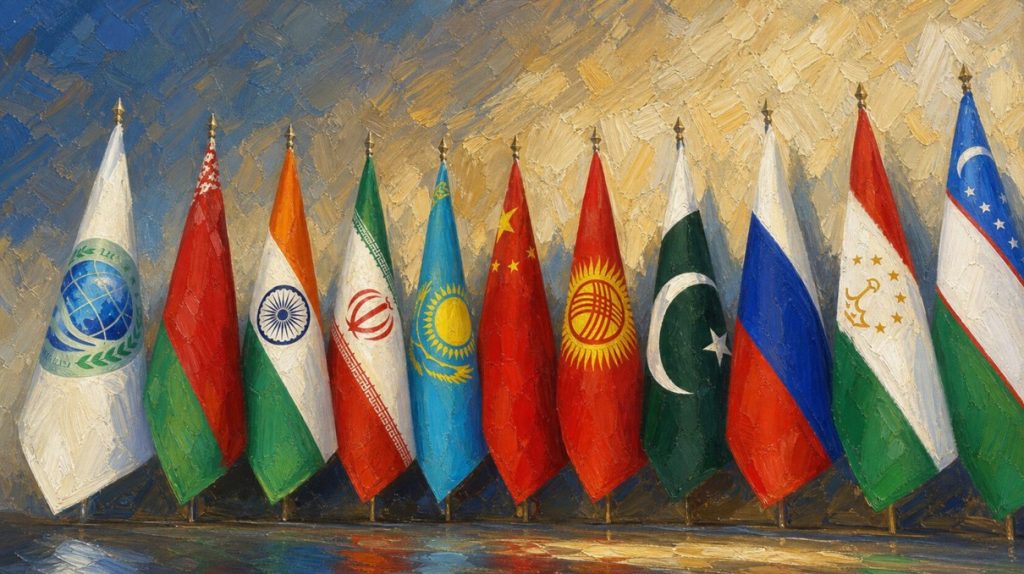
On June 10, the international community is marking for the second time the International Day for Dialogue among Civilizations, established by UN General Assembly resolution A/RES/78/286 at the initiative of China and with the co-sponsorship of more than 80 states. The UN decision emphasized that all achievements of civilizations constitute the “collective heritage of humanity” and that dialogue plays a key role in maintaining peace, advancing development, and strengthening global solidarity. For Kazakhstan, as a Eurasian bridge-state historically located at the crossroads of cultural routes, this date naturally aligns with efforts to develop partnership with China and to reflect on the Global Civilization Initiative put forward by Chinese President Xi Jinping in March 2023.
The Global Civilization Initiative has several features that distinguish it from earlier projects of dialogue or alliance of civilizations (referring to the UN-backed Iranian project “Dialogue Among Civilizations” of the late 1990s and early 2000s and the “Alliance of Civilizations” initiated by Spain and Turkey, which were aimed at reducing intercultural and interreligious tensions). First, the Global Civilization Initiative is embedded in the bundle of Chinese global initiatives in the fields of development, security, and civilization, which gives it not only a humanitarian but also a normative-political character, that is, a set of value orientations and principles through which Beijing offers an interpretation of the contemporary world order and the “rules of the game” in international relations. This framework proceeds from recognition of multipolarity and multiple paths to modernization and implies rejection of the universalization of a single development model. Unlike earlier initiatives under the UN umbrella, which relied primarily on universalist discourse, the Global Civilization Initiative emphasizes combining “common values of humanity” with respect for sovereignty and civilizational diversity, distancing itself from the practice of ideological confrontation and political-value conditionality.
Key principles of the Global Civilization Initiative
The Global Civilization Initiative puts forward four interrelated principles: respect for the diversity of civilizations, promotion of values common to humanity, combining heritage and innovation, and strengthening international people-to-people exchanges and cooperation. Documentary and conceptual materials emphasize the need for equality, mutual learning, dialogue, and inclusiveness among civilizations so that cultural exchange overcomes alienation, mutual learning overcomes confrontation, and coexistence overcomes feelings of superiority. The Global Civilization Initiative calls on countries to take historical and cultural experience into account in modern conditions, seek creative reinterpretation of traditions, and develop a network of inter-civilizational dialogue and cooperation.
In essence, the Global Civilization Initiative offers a normative framework for forming a “community with a shared future for humanity” on a cultural-civilizational basis, complementing the development and security initiatives already put forward by China. It proceeds from the recognition that the world cannot be reduced to linear Western modernization, but instead represents a diversity of development paths based on their own traditions and values. In this way, the initiative challenges the thesis of a “clash of civilizations,” proposing instead a paradigm of dialogue, mutual enrichment, and the search for common ground in the spheres of peace, justice, and cooperation.
The International Day for Dialogue among Civilizations as a tool for implementing the Global Civilization Initiative
The establishment of the International Day for Dialogue among Civilizations on June 10 became a concrete multilateral measure to implement the ideas of the Global Civilization Initiative at the global level. The UN resolution underscores the importance of respecting the diversity of civilizations and the key role of dialogue in maintaining peace, promoting common development, improving people’s well-being, and achieving collective progress. The document also notes the need to combat discrimination and prejudice, strengthen mutual understanding and trust, expand contacts between peoples, and reinforce solidarity and cooperation.
For Kazakhstan, it is important that this resolution is universal in nature and addressed to all member states and organizations of the UN system, which are invited to observe this day and promote the values of dialogue, mutual respect, and tolerance. This creates an institutional platform on which Eurasian countries, including Kazakhstan and China, can systematically advance the humanitarian dimension of their relations—from academic and youth exchanges to joint cultural projects and dialogue platforms.
Kazakhstan’s vision of civilizational dialogue
Kazakhstan has its own enduring tradition of promoting dialogue among civilizations and cultures. It is in Astana that the Congress of Leaders of World and Traditional Religions is regularly held, and Kazakh diplomacy consistently advocates interfaith and intercultural dialogue as a resource for global stability. In this regard, the institutionalization of the International Day for Dialogue among Civilizations fits naturally with Kazakhstan’s existing experience and opens new opportunities for synergy with Chinese initiatives.
President of Kazakhstan Kassym-Jomart Tokayev has repeatedly emphasized that relations with China have reached the level of an “eternal comprehensive strategic partnership,” and that China is for Kazakhstan a “neighbor given by fate, a close friend, and an eternal strategic partner.” At the “China – Central Asia” platform, he positively assesses President Xi Jinping’s initiative to form a “community with a shared future of neighboring countries” and stresses the importance of strengthening mutual understanding among the peoples of the region. Kazakhstan’s approach creates favorable ground for perceiving the Global Civilization Initiative not as an external project, but as a jointly shaped agenda of regional cooperation.
The Global Civilization Initiative and Kazakhstan-China partnership
At the bilateral level, the Global Civilization Initiative logically complements the economic and infrastructure dimensions of Kazakhstan-China cooperation within the framework of the “Belt and Road” initiative. If transport-logistics and investment projects ensure the material connectivity of Eurasia, the Global Civilization Initiative offers an ideological and value-based framework that contributes to the sustainability of these ties in the long term. For Kazakhstan, this means the opportunity to strengthen the human capital of the partnership through expanded educational, scientific, cultural, and youth exchanges with China.
An important task is the harmonious combination of Kazakhstan’s model of a secular, multiethnic, and multiconfessional society with the Chinese approach to civilizational dialogue, based on respect for the diversity of development paths and rejection of imposing one’s own models. This creates a chance to build a unique Eurasian architecture of interaction in which Central Asia and China act not only as economic partners, but also as co-creators of new forms of cultural and value-based cooperation.
Challenges and prospects for Kazakhstan
Despite the obvious potential of the Global Civilization Initiative, its practical implementation is associated with a number of challenges. It is necessary to avoid turning civilizational rhetoric into a tool of geopolitical competition or ideological bloc division. For Kazakhstan, as a state with a multi-vector foreign policy, it is fundamentally important that participation in promoting the Global Civilization Initiative not be perceived as a departure from the universal norms of the UN Charter and generally recognized human rights, but rather as a contribution to strengthening trust and reducing conflict potential at the global level.
Promising directions for Kazakhstan include:
-the development of joint Kazakh-Chinese research centers on issues of civilizational dialogue and Eurasian identity;
-the expansion of academic mobility programs, language study, and joint educational programs;
-the holding of regular forums of youth, cultural figures, and religious leaders of the two countries in the context of the International Day for Dialogue among Civilizations;
-the inclusion of the Global Civilization Initiative in the agenda of regional platforms “Central Asia – China” and cooperation with relevant UN structures.
In the future, Kazakhstan’s participation in promoting the Global Civilization Initiative and the International Day for Dialogue among Civilizations can strengthen its role as a key Eurasian hub of intercultural interaction, as well as add an additional dimension to the strategic partnership with China. For Kazakh experts, this opens a broad field for conceptual development of their own doctrine of civilizational dialogue, consonant with both national interests and the global agenda of peace and cooperation.
China Studies Center
Photo: un.org