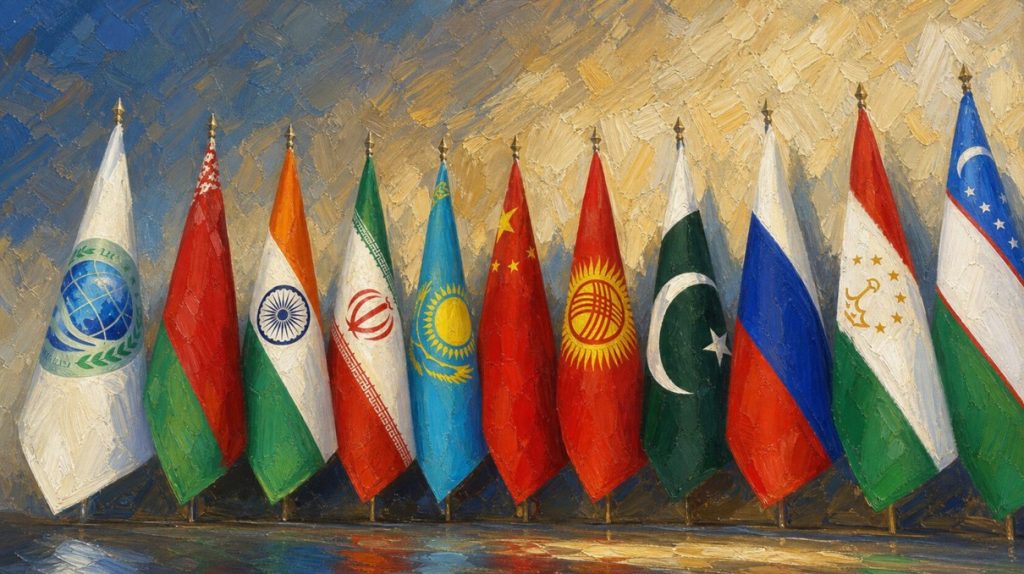
The International Seminar “Joint Promotion of Green Development within the SCO” was held on September 10, 2025. The event was organized by the Center for China Studies (Astana). This event brought together leading representatives of the diplomatic corps, business, scientific community and international organizations to discuss issues of ecology, sustainable development and new formats of regional cooperation in the Shanghai Cooperation Organization.
The seminar opened with a welcoming speech by the Director of the China Studies Center Gulnar Shaimergenova, who emphasized that environmental responsibility issues are becoming a key part of national and global policy, and Kazakhstan’s transition to a “green” economy is recognized as a strategic priority of the state, according to the recent Address of President Kassym-Jomart Tokayev. Particular attention was paid to the success of the Taza Kazakhstan project, as well as the global governance initiative put forward by Chinese President Xi Jinping at the SCO summit in Tianjin, where three new cooperation platforms were announced – in the field of energy, green industry and digital economy.
Greetings from the diplomatic corps and SCO representatives
In his welcoming speech, Minister-Counselor of the Chinese Embassy in Kazakhstan Gou Yonghai noted that at the SCO Summit in Tianjin, China presented the global governance initiative – a new benchmark for the international agenda, calling for strengthening a fair and multilateral global order based on respect for sovereignty, practical coordination and open cooperation. At the same time, the creation of six new joint cooperation platforms was announced: three applied ones – in energy, green industry and digital economy, as well as three cooperation platforms in the field of scientific and technological innovation, higher education and vocational training. China proposed the establishment of the SCO Development Bank, humanitarian and financial assistance (including grants and loans worth billions of yuan), and the creation of a center for cooperation in the field of artificial intelligence.
Adviser to the SCO Secretariat Kazybek Kochkonov noted that China’s presidency of the SCO was held under the auspices of the Year of Sustainable Development and led to the creation of a comprehensive agenda on ecology, energy and green transformation. Key documents and political statements were adopted aimed at developing green industry, technological renewal and reducing greenhouse gas emissions. The expert community is called upon to play a special role in developing practical recommendations to facilitate the implementation of the Tianjin summit outcomes.
The speakers at the seminar presented a wide range of reports reflecting the real achievements and challenges of the region:
Wang Guanghui, President of the China Association for Water and Electricity Quality Management, Dean of the Institute for Water and Electricity Quality Development, delivered a report on “How regional organizations can play a better role in promoting green development in the region.”
Kairat Batyrbayev, Executive Director of the Eurasian Association of International Studies, noted the SCO’s transition from declarative to practical, emphasizing the role of international financial institutions and citing examples of implemented projects: Zhanatas Wind Farm (Kazakhstan), Shokpar Wind, solar power plants in Uzbekistan, as well as significant green energy initiatives in Kyrgyzstan and Pakistan. He outlined three conditions for success – the development of institutional mechanisms, a unified system of green financing and cross-border partnerships.
Kanayim Baktygulova, Professor of the Faculty of Oriental Studies and International Relations of the K. Karasayev Bishkek State University, revealed the concept of the SCO “Green Bridge”, where the introduction of low-carbon technologies and the harmonization of environmental standards in the “Belt and Road” transport and energy projects are considered as a tool for economic synergy and environmental safety.
Erlan Zhumabaev, Director of the Regional Environmental Center for Central Asia, shared the experience of 25 years of partnership between the five Central Asian countries, noted sustainable development, the development of educational and practical projects, as well as the integration of the region into global climate processes.
Professor of Fudan University Ma Bin presented an analysis of the mechanisms of technological and innovative cooperation, noting the need to move from “top-down” to multi-level coordination, where the role of local initiatives becomes the driver of the development of the entire SCO.
Kanatbek Aziz, Director of the Research Institute of Geopolitics and Strategy (Kyrgyzstan) demonstrated the importance of water diplomacy, the problem of lost glaciers and the need for collective action to form a new architecture of global environmental security. Particular attention was paid to the recommendations for the creation of a Regional Water and Climate Council and the integration of Afghanistan into the regional agenda.
Adyl Kydyrbekov, Advisor to the Director General of the “CNPC International in Kazakhstan” presented a speech on the prospects for low-carbon transformation in Kazakhstan. In his speech, he presented the company’s strategic plan for the transition to energy production from clean sources up to 50% by 2050, integrated projects in wind energy, solar energy, sustainable agriculture, industrial waste processing, land reclamation and the production of biofuel for aviation.
Abdyrashid Usenov, Project Manager of the Investment and Marketing Department of JSC NC Kazakh Invest, noted in his speech that Kazakhstan and China, relying on a high level of strategic partnership and a large-scale investment portfolio, are moving from raw materials industries to joint “green” and innovative projects in energy, agriculture, transport and ecology, and the SCO is considered a unique platform for uniting the efforts of countries in the region for the sake of sustainable development, reducing the carbon footprint and creating new opportunities for future generations.
The speech by Eldor Tulyakov, Executive Director of the Development Strategy Center (Uzbekistan), highlighted joint work with China in the field of green technologies, the development of solar and wind energy, innovations in the restoration of the Aral Sea region and modern research in ecology. The role of youth and expert campaigns as the basis for the formation of a new culture of sustainable development is emphasized.
Ulan Nukhitzhan, Senior Researcher at the Institute of Foreign Policy Studies under the Ministry of Foreign Affairs of the Republic of Kazakhstan, made a report on the topic “Joint Overcoming of Environmental Challenges within the SCO: the Problem of Water Resources”. In his speech, he noted that the problem of water is one of the key transboundary environmental challenges for the SCO countries, and only through joint efforts, scientific and technological cooperation can the threat of water shortage be turned into a point of growth. The President of Kazakhstan Kassym-Jomart Tokayev proposed the creation of the SCO Center for the Study of Water Problems, which will become a practical platform for monitoring, technology exchange, project development and training of specialists. This initiative reflects a strategic vision: water should not be seen as a source of conflict, but as a resource for cooperation, peace and sustainable development of the entire region.
Experts, diplomats and business representatives agree that the combined efforts of states, international institutions and local communities can create a sustainable future for Eurasia, reduce the threats associated with climate change, preserve the region’s water and energy resources, and implement green economy and innovation projects that meet high international standards.
The international seminar confirmed the role of the SCO as a key platform for the formation and promotion of joint environmental initiatives, the integration of green standards and the strengthening of sustainable dialogue between the countries of the region.
China Studies Center