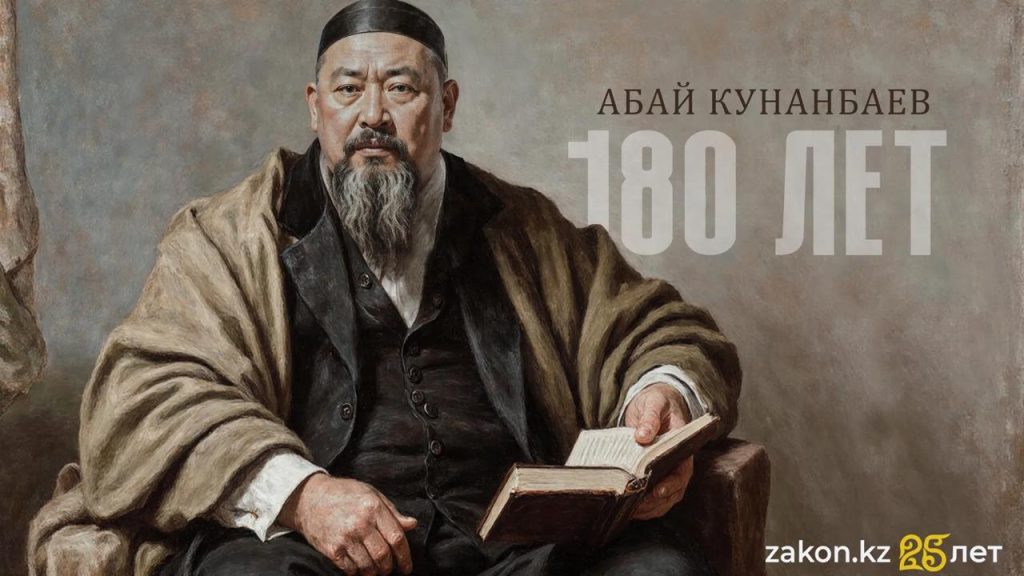
On the day marking the 180th anniversary of the great thinker, poet, and founder of modern Kazakh literature Abai Kunanbayev, the traditional Abai Readings were held at the Beijing Jingtai Art Museum in Chaoyang Park. The event brought together diplomats, representatives of government agencies, members of China’s academic and creative intelligentsia, the Kazakh diaspora in China, as well as journalists from Kazakh and Chinese media.
In his welcoming speech, the Ambassador of Kazakhstan to China, Shakhrat Nuryshev, emphasized Abai’s historical role as a symbol of the spiritual heritage of the Kazakh people and a source of moral guidance for future generations.
Deputy Director of the Department of Central Asian and European Countries of the Ministry of Foreign Affairs of the People’s Republic of China, Gao Mingbo, highlighted the significance of Abai’s cultural legacy and the importance of the readings as a platform for cultural exchange between Kazakhstan and China.
The evening featured recitations of Abai’s poems in Kazakh and Chinese, accompanied by musical performances of kyuis and the poet’s works on Kazakh and Chinese national instruments.
A monument to Abai Kunanbayev, created by Chinese sculptor Yuan Sikun, was erected in 2014 on the grounds of the Jingtai Art Museum in Chaoyang Park. Since then, it has become a focal point for cultural events and a lasting symbol of the spiritual connection between Kazakhstan and China.
Why the Abai Readings remain an important tradition:
📌Abai’s poems and parables, translated into Chinese, are widely read and appreciated, with university courses dedicated to his work offered at institutions such as Xinjiang University and the Minzu University of China.
📌 Since 2015, Kazakh cultural centers and Kazakh language departments have been established in Beijing, Shanghai, Dalian, and Xi’an, where Abai’s literature and philosophy are actively studied.
📌 The annual readings at the monument have become a symbol of spiritual and cultural ties built on mutual respect.
The Abai Readings in Beijing are not merely a tribute to the poet’s memory—they are a living continuation of the cultural dialogue between Kazakhstan and China. Through poetry, music, diplomatic addresses, and the participation of creative youth, the event fosters mutual understanding, respect, and inspiration, strengthening both friendship between peoples and educational cooperation.
China Studies Center