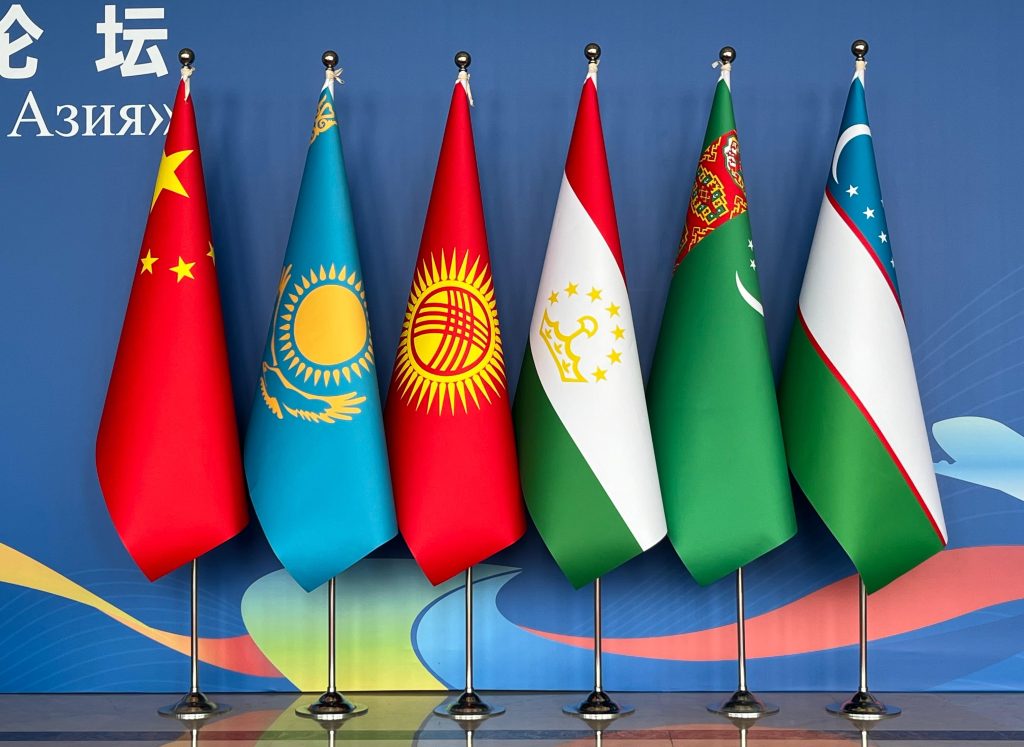
China-Central Asia today is not a “promising direction,” but an already established strategic contour of Greater Eurasia that influences global trade, energy, technology, and security chains. In 2025, China’s total trade turnover with the five Central Asian states reached a record $106.3 billion, increasing by almost 12% compared with 2024 and in fact doubling over the past four years. China became the largest trading partner of all countries in the region, and accumulated Chinese investment in Central Asia exceeded $35 billion, mainly in infrastructure, energy, and industry.
Kazakhstan occupies a special place in this picture: trade with China continues to grow rapidly and already accounts for a significant share of the country’s foreign trade turnover, and further development of cooperation requires not only expanding trade and increasing the number of projects, but also a deeper analysis of their long-term consequences. It is important to assess the distribution of risks and benefits, changes in the structure of interdependence, the formation of a strategic balance, as well as the significance of these processes for Kazakhstan’s and Central Asia’s role in the Eurasian space.
New architecture: from a regional format to an institutional core
Over the past few years, the “China – Central Asia” format has become one of the important mechanisms of regional interaction. The Chinese side views it as a tool for promoting high-quality cooperation, noting the development of interagency mechanisms in the fields of energy, green energy, agriculture, industry, transport, and digitalization. Alongside this, coordination platforms are being formed on law enforcement cooperation, logistics, agricultural interaction, and humanitarian contacts, including university ties and youth exchanges.
For Kazakhstan, this institutional shift coincided with unprecedented growth in Chinese investment. In the first half of 2025, our country became the largest recipient of Chinese funds under the Belt and Road Initiative among more than 150 states, attracting about $23 billion, more than Thailand and Egypt. In total, as of mid-2025, more than 220 industrial projects with Chinese capital participation were being implemented in Kazakhstan, with a total value of over $66 billion, including several projects worth $5-12 billion each in metallurgy and energy.
In fact, Kazakhstan is becoming one of the important platforms for implementing new forms of industrial and infrastructure cooperation with China – from the development of aluminum and copper clusters to the infrastructure support of the Middle Corridor and new logistics routes. These processes reflect not only the expansion of the bilateral agenda, but also a broader transformation of the country’s economic geography: from the formation of logistics hubs in the west and north to the development of industrial nodes in the central and eastern regions.
Three areas can be identified in which Kazakhstan has become a kind of “master case” of China-Central Asia interaction.
First, trade. According to the Kazakh side, bilateral trade turnover with China in 2025 amounted to $34.1 billion, and China’s share in Kazakhstan’s foreign trade reached almost 23.7%. At the same time, Chinese statistics record a higher figure of $48.68 billion, which means a discrepancy of almost $14.6 billion. Over the past five years, this statistical gap has gradually widened and in 2025 exceeded 40% of the figure reflected by the Kazakh side.
Such a discrepancy requires separate and careful analysis, since it is not only about differences in accounting methodology. It touches on the broader issue of data quality, the transparency of trade flows, and trust in assessing the real scale of bilateral interaction. It is important to understand what factors create this gap, the specifics of accounting for transit and re-export, differences in customs valuation, pricing, product classification, or other trade and logistics practices. Without such analysis, discussion of “high-quality” cooperation risks relying on an incomplete or ambiguous statistical basis.
Second, investment. In 2025, Kazakhstan, according to available estimates, became one of the largest recipients of Chinese investment under the Belt and Road Initiative: in the first six months, the volume of investment amounted to about $23 billion. The main investment areas include metallurgy, energy, and infrastructure. Among the most significant projects are an aluminum cluster worth up to $12 billion in Kostanay and Aktobe regions, aimed at a full production cycle from raw material extraction to aluminum product output, as well as major projects in the copper sector, including the construction of a new smelting plant in Abai region.
Such an inflow of capital creates important opportunities for industrialization, modernization of the production base, and the formation of new export niches. At the same time, it requires careful assessment of long-term consequences, including technological, infrastructure, and environmental aspects. If the cooperation model is built primarily around external technologies, equipment, construction, and service support with limited localization of added value in Kazakhstan, this may intensify structural imbalances. Therefore, it is fundamentally important that such projects be embedded in a broader industrial strategy focused on technology transfer, the development of local competencies, environmental standards, and a sustainable increase in Kazakhstan’s role in production chains.
Third, critical minerals. Kazakhstan today occupies a significant place in the global market for strategic raw materials: the country is one of the largest uranium producers, has a developed raw material base in the copper sector, and is considered a promising participant in the rare earth elements market. The presence of large mineral resources increases interest in Kazakhstan from external partners, especially against the backdrop of the growing importance of critical minerals for the energy transition, industry, and high technologies. At the same time, a substantial share of exports of rare earth metals and their compounds in key commodity categories is oriented toward China, which retains leading positions in global chains of extraction, processing, and supply.
Against this backdrop, in 2025-2026 Kazakhstan intensified work on diversifying external partnerships in the field of critical minerals. In particular, during President K.-Zh. Tokayev’s visit to Washington in November 2025, a memorandum on cooperation between Kazakhstan and the United States in this area was signed. In February 2026, at the first Ministerial Conference on Critical Minerals in Washington, Kazakhstan confirmed its readiness to develop supplies of rare earth metals to the American market. At the same time, cooperation with European and Japanese partners is expanding, indicating Kazakhstan’s desire to integrate into more diversified and resilient critical raw material supply chains.
Thus, Kazakhstan is becoming one of the significant nodes in global competition for critical resources. This is precisely what makes interaction with China more complex and multilayered than a simple description of it as a progressive “success story.”
In light of these trends, it seems important to highlight four areas that require special attention both at the regional level and in bilateral dialogue with China.
The first area is linked to structural asymmetry and the risk of entrenching the region’s raw-material specialization. In trade between China and the Central Asian countries, a stable pattern persists: China mainly exports machinery, equipment, and high-tech products, while exports from the region are largely represented by gas, oil, metals, chemical products, agricultural goods, and mineral raw materials. For Kazakhstan, this trend is especially noticeable: the growth in trade turnover in 2025 was largely driven by increased imports of Chinese goods and equipment, while the export basket still relies on raw material categories.
Such a structure may create the impression of quantitative balance, but from the perspective of long-term development it preserves the risk of a technological and industrial gap. Given the active participation of Chinese companies in major infrastructure, metallurgical, and energy projects, China is becoming for the region not only an important market and supplier of goods, but also one of the key sources of technologies, equipment, standards, and project solutions.
At the regional level, this requires a shift from the logic of individual facilities to the logic of value chains. Participation in major projects should be linked to the development of local processing, the creation of joint ventures for equipment production, and the formation of service and engineering centers within the region’s countries. At the level of Kazakhstan, it is important to integrate Chinese projects into national industrialization programs in such a way that major contracts in metallurgy, critical minerals, and energy include commitments to R&D, technology localization, and workforce training.
The second area is linked to critical minerals as a new factor in international competition. China’s tightening control over exports of a number of strategic minerals important for high-tech industries, the defense sector, and artificial intelligence systems is already affecting the resilience of global supply chains. For Central Asia, and especially for Kazakhstan, this simultaneously creates challenges and opens new opportunities: on the one hand, the region remains significantly dependent on Chinese demand and processing capacities; on the other, it is becoming the object of growing interest from the United States, the EU, Japan, and other partners.
In 2025-2026, Kazakhstan took a number of steps indicating a desire to diversify external directions of cooperation in the field of rare earth and other critical minerals, including by expanding dialogue with the United States. This can be seen as an attempt to integrate into a broader range of global supply chains and reduce dependence on a single dominant direction. At the same time, at the regional level there is still no coordinated approach to managing this resource potential: Central Asian countries act mainly independently and in some cases compete for the same investments, technologies, and sales markets.
In this regard, Central Asia needs at least a “soft” coordination mechanism on critical minerals. This does not necessarily mean creating a single corporation or a rigid supranational structure. At the first stage, it could be a platform for information exchange, coordination of basic principles of licensing, environmental standards, requirements for localization of processing, and approaches to interaction with external partners.
In dialogue with China, it is also important to gradually shift the emphasis from projects focused primarily on extraction and raw material exports to joint investments in processing, production of materials and components for green energy, energy storage, and electronics. Such an approach would reduce the risk of entrenching raw-material specialization, increase added value within the region, and reduce Central Asia’s vulnerability to the possible politicization of supply chains.
The third area is linked to the rapid spread of Chinese digital solutions and elements of artificial intelligence in the region amid the absence of a full-fledged regional digital sovereignty strategy. China is actively offering Central Asian countries solutions in digital infrastructure, smart cities, logistics, electronic platforms, surveillance systems, and financial technologies. This opens access to modern tools of digital transformation, but at the same time brings into the region broader competition between digital ecosystems of China, the West, and other external players.
In practice, this means that key systems from ports and railways to energy and urban services increasingly depend on software and hardware solutions from one or several foreign suppliers. At the same time, the legal and regulatory framework in the areas of data protection, algorithm control, the use of artificial intelligence in public administration, and cybersecurity is still being formed and in many cases remains fragmented.
Therefore, issues of artificial intelligence, digital security, and data governance should be elevated to the level of a strategic “China – Central Asia” dialogue rather than considered solely as the subject of separate contracts between ministries, companies, or technology suppliers. The region needs its own principles of digital sovereignty: transparent rules for data storage and processing, conditions for foreign companies’ access to critical infrastructure, requirements for localization, cybersecurity, and auditing of digital solutions. In this case, the participation of China, the United States, the EU, and other partners will be based not on ad hoc arrangements, but on a more understandable and predictable architecture of rules.
The fourth area is linked to maintaining strategic balance amid growing competition among external actors for influence in Central Asia. China’s economic presence in the region continues to expand through trade, infrastructure projects, and investment, strengthening the importance of the eastern direction in the Eurasian architecture of interaction. At the same time, the United States, the European Union, Japan, Middle Eastern countries, and other partners are intensifying their own initiatives – from dialogues on critical minerals to alternative infrastructure and technology projects.
For Kazakhstan and other Central Asian countries, the key question is not choosing between external centers of power, but forming such a model of multi-vector policy in which competition among external partners works for the region’s development, increases its resilience, and expands the space for independent decisions. This requires not a reactive but a proactive strategy: its own initiatives, closer regional coordination, and the ability not only to respond to external offers, but also to formulate a long-term agenda independently.
In this context, the “China – Central Asia” format should be used not only as a channel of interaction with Beijing, but also as a platform for demonstrating regional agency. Through it, the countries of the region can promote their own infrastructure initiatives, coordinated approaches to critical minerals, common principles of digital security, and more balanced conditions for investment cooperation. At the same time, it is important to develop “cross-cutting” institutional connectivity between the “China – Central Asia” format and the “Central Asia – EU,” “Central Asia – US,” “Central Asia – Japan” dialogues, as well as regional platforms including the SCO and the EAEU.
Thus, Central Asia and Kazakhstan in particular are at a stage where the quantitative indicators of cooperation with China, whether regional trade turnover of over $100 billion or tens of billions of dollars in investment in Kazakhstan, truly reflect the scale of achieved interaction. However, the transition to truly “high-quality” cooperation will depend not only on the volume of trade and investment, but also on the ability to solve four key tasks: reduce structural asymmetry, avoid entrenching raw-material specialization, ensure digital resilience, and maintain strategic balance.
This is precisely where space opens up for a more ambitious role for Kazakhstan. As one of China’s key partners in Central Asia, Kazakhstan can do more than simply adapt to the changing Eurasian architecture; it can participate in shaping it. To do this, it is important to turn trade, investment, and infrastructure into the basis of a more complex model of cooperation with technology localization, development of processing, strengthening of human capital, data protection, environmental standards, and greater added value within the country. Ultimately, Kazakhstan’s strategic task is not to limit cooperation with China, but to improve its quality and balance. If the China direction is embedded in the national and regional development strategy, it can become not a source of new dependence, but an instrument of industrial renewal, technological growth, and strengthening Central Asia’s agency in Eurasia.
China Studies Center