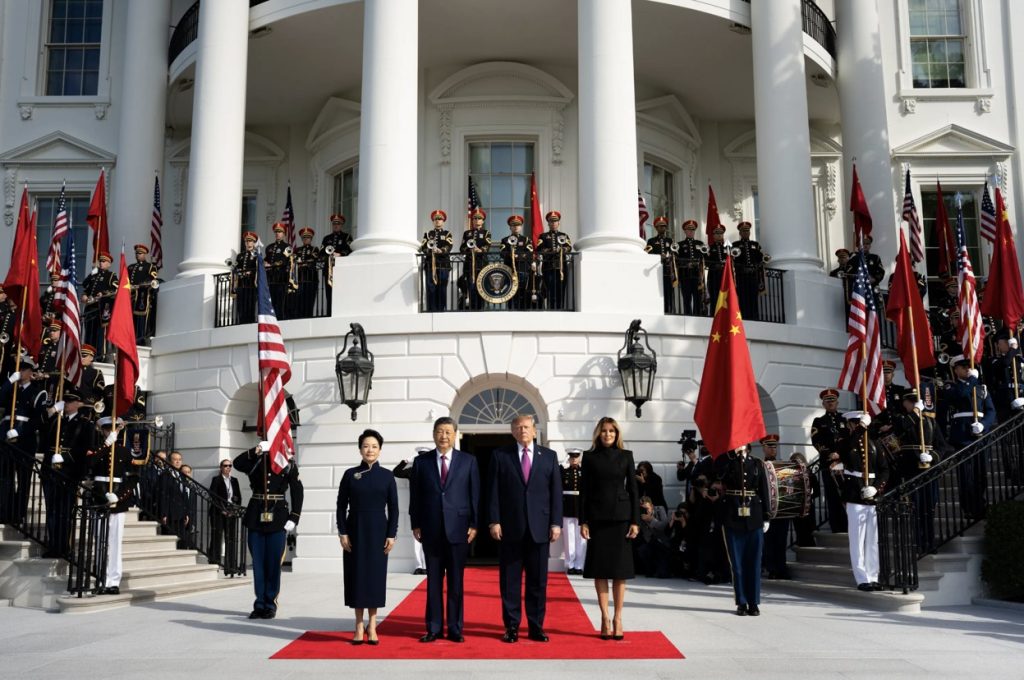
The state visit to the United States by Chinese President Xi Jinping, which has now concluded, became a significant stage in Beijing and Washington’s attempt to give a more sustainable shape to relations that are simultaneously characterized by deep interdependence and strategic rivalry.
The main result of the meeting is not the disappearance of contradictions. They remain in trade, technology, security, and around Taiwan. More important is that the sides have begun to form a system of rules and working mechanisms that make it possible to separate competition from those areas where interaction remains necessary.
After the May meeting in Beijing, China and the United States were already using the formula of “constructive relations of strategic stability.” In Washington, it acquired additional content: the sides agreed to build relations on the basis of respect, fairness, and reciprocity. This wording appeared both in the Chinese official statement and in the White House’s final document.
This is important not so much from the standpoint of diplomatic rhetoric as as an attempt to define the minimum principles for the coexistence of the two largest centers of power.
As a result of the visit, the sides also recorded consensus on eight points covering the political principles of bilateral relations, trade and economic interaction, artificial intelligence, anti-narcotics and law-enforcement cooperation, the international agenda, and other practical areas. The very fact that such a package of agreements emerged shows that the Washington meeting went beyond political declarations and acquired concrete substantive content.
The Chinese approach presented during the visit is based on the idea that rivalry between the two powers should not in itself lead to confrontation. In his remarks at the White House, Xi Jinping spoke directly about the need to keep competition within certain bounds, develop regular interagency contacts, and improve crisis communication mechanisms between the armed forces.
The practical results of the visit show that this idea is gradually acquiring institutional substance. According to the PRC Foreign Ministry, the sides reached eight results and agreements. Among them are the creation of a bilateral dialogue on the risks and benefits of artificial intelligence, the next round of which is to take place in November, as well as a separate communication channel in case of AI-related incidents. In addition, Chinese and American military officials agreed to formalize in the near future a memorandum on crisis communication and crisis prevention.
In essence, this is about creating “safeguards” in those areas where the consequences of an error or a misinterpretation of the other side’s actions can be especially high.
It is also telling that artificial intelligence is being discussed simultaneously as an object of competition and as a sphere requiring joint risk management. This may become one of the defining features of future China-U.S. relations: the sides will seek to outpace each other technologically, while at the same time developing minimum safety rules.
Another result of the visit is linked to the economy. If in May the general mechanisms of interaction were defined, then in September they began to move into the practical phase. Washington announced the launch of the Trade Council and the Investment Council. Within the trade mechanism, the sides agreed on recommendations for a more favorable tariff regime for non-sensitive goods worth about $30 billion in each direction, and also created a working group on agricultural market access issues.
It is important not to overestimate the scale of these decisions. This is not yet about ending trade competition or fully eliminating tariff and non-tariff barriers.
But the logic of settlement itself is changing. Instead of a situation in which every new problem automatically triggers another round of pressure and retaliatory restrictions, permanent platforms are being created where specific issues can be discussed at the working level. For business, this predictability is often no less important than the size of any individual tariff.
In this context, the Chinese side consistently emphasizes the complementarity of the two economies and the need to expand the space for cooperation. Washington frames the same process through the concepts of fairness, reciprocity, and the protection of American economic interests. The difference in approaches remains, but the presence of common working mechanisms reduces the likelihood that every economic contradiction will immediately be politicized into an interstate crisis.
Also of interest is law-enforcement cooperation. China and the United States officially recorded the results of joint efforts against new psychoactive substances and chemical precursors. According to China’s Foreign Ministry, thanks to joint work several cases were solved and dozens of suspects were detained in the two countries. The White House, for its part, separately noted the measures taken by China to control fentanyl precursors. This is a good example of how practical cooperation is possible even in the absence of strategic trust.
Such areas do not remove fundamental contradictions, but they create a kind of lower level of relations that can continue to function regardless of the political climate.
For Beijing, this is also an opportunity to demonstrate that its approach to relations with the United States is not limited to responding to pressure or countering American policy. The Chinese side seeks to present itself as a participant interested in preserving channels of cooperation on issues of transnational significance.
The Washington meeting also showed another important shift: China and the United States are trying to separate bilateral competition from issues where their joint participation is necessary for the functioning of the international system.
The leaders confirmed mutual support for China hosting the APEC economic leaders’ meeting and the United States hosting the G20 summit, as well as their intention to participate in each other’s events. The situation around Iran was also discussed. Both sides agreed that Tehran should not develop nuclear weapons and that international waterways should remain free from unilateral transit fees.
The very fact of such agreements does not mean that the American and Chinese approaches to international crises coincide. However, it does show that Beijing and Washington recognize the existence of areas where their competition must be combined with at least minimal strategic coordination.
This is precisely where China’s thesis about the “responsibility of major powers” acquires its most practical content. The capabilities of the two countries are so great that their interaction, or lack of interaction, directly affects energy, global trade, financial markets, and global governance.
For China, the visit had another meaning. Beijing came to Washington not with the position of a side seeking merely to stabilize relations after a crisis, but with a fairly developed concept of what relations between the largest powers should look like: mutual respect, rejection of attempts at absolute superiority, management of disagreements, and preservation of space for cooperation.
This concept, of course, reflects the Chinese understanding of international relations and its own national interests. The United States interprets the same processes differently, placing greater emphasis on reciprocity, national security, market access, and the protection of American companies. But the very ability of the sides to translate two different strategic visions into a common set of concrete mechanisms and agreements is an important result of the meeting.
That is why the visit cannot be reduced either to a diplomatic ceremony or to a temporary “thaw.” Washington showed that the most realistic model of U.S.-China relations in the near term is neither partnership nor full decoupling, but managed competition with selective cooperation. This structure is potentially more beneficial to the international system than a scenario of rigid bloc division.
For Asian countries, it reduces the risk of having to choose between two mutually exclusive economic and technological spaces. For Europe, it preserves the possibility of maintaining its own relations with China without a complete rupture of transatlantic coordination. For countries of the Global South, more stable relations between the two largest economies mean a lower likelihood of sharp disruptions to trade, investment, and production chains.
For Central Asia, this trend has especially practical significance.
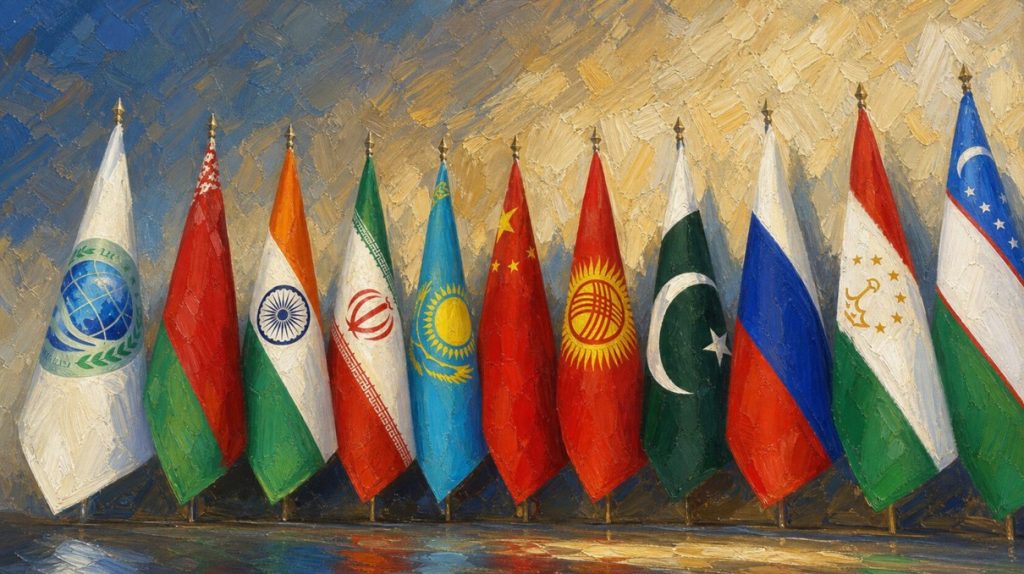
Kazakhstan and other states in the region are simultaneously developing economic cooperation with China and are interested in expanding relations with the United States, the European Union, and other external partners. The less the international system is built on the rigid logic of “either with one side or with the other,” the more room remains for an independent multi-vector policy.
At the same time, the new China-U.S. construct does not eliminate external risks. Competition in technology, critical minerals, infrastructure, and standards will continue. But if this competition remains manageable, Central Asian countries gain more opportunities to assess projects based on their own economic efficiency and national interests, rather than solely on the logic of geopolitical choice.
The Washington meeting created a sufficiently broad set of agreements to speak of a transition to more systematic management of China-U.S. relations. But the sustainability of this model will not be determined by the number of political formulations. The real test is whether the trade and investment mechanisms will work, whether the next AI dialogue will take place, whether the military agreement on crisis communication will be formalized, and whether the sides will be able to continue cooperating on issues where their interests overlap.
The positive outcome of the visit lies прежде всего in the fact that Beijing and Washington demonstrated a willingness to seek such a model of interaction in which strategic rivalry does not require constant confrontation.
For China, this is an opportunity to advance its own vision of relations between major powers, based on peaceful coexistence and mutual benefit. For the United States, it is an opportunity to manage competition while preserving tools to protect its own economic and strategic interests.
For the rest of the world, the most important thing is the result itself: the largest powers are trying not to eliminate their differences, which under current conditions is unrealistic, but to learn to coexist with them. And if Washington’s agreements are followed through at the working level, that may become the most significant legacy of the September visit.
China Studies Center