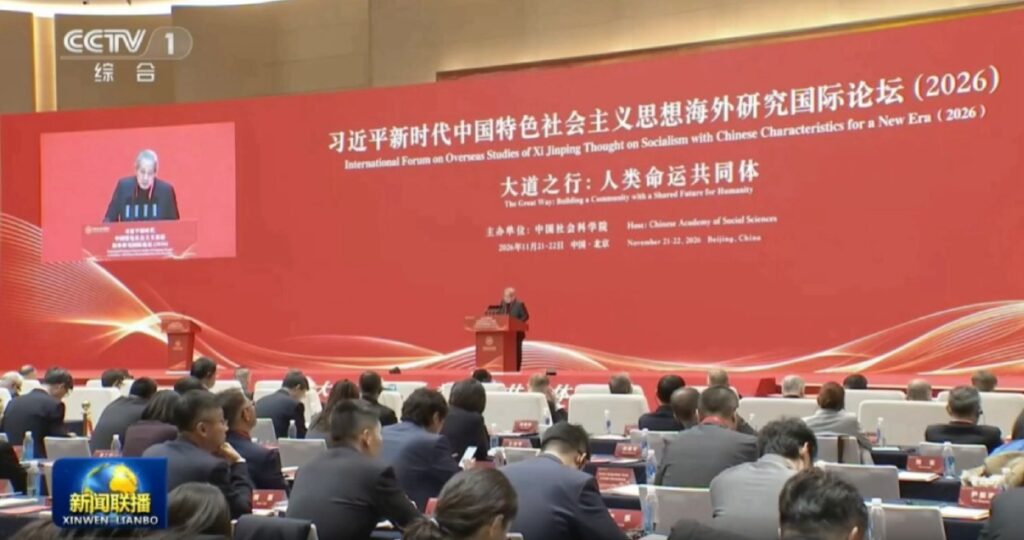
On November 21-22, 2026, Beijing hosted the International Forum on Overseas Studies of Xi Jinping Thought on Socialism with Chinese Characteristics for a New Era, organized by the Chinese Academy of Social Sciences (CASS).
Held under the theme “The Great Way: Building a Community with a Shared Future for Humanity,” the Forum brought together nearly 650 participants from more than 80 countries and regions, including scholars, former political leaders, and representatives of universities, research institutions, and think tanks.
The opening ceremony featured a keynote address by Li Shulei, a member of the Political Bureau of the Communist Party of China Central Committee and Head of its Publicity Department. Liu Haixing, Minister of the International Department of the CPC Central Committee, and Gao Xiang, President of the Chinese Academy of Social Sciences, delivered opening remarks.
The Forum included a main session, six parallel forums, a youth forum, and four high-level dialogues. Six additional thematic forums were held simultaneously in Hong Kong, Uzbekistan, Ethiopia, Greece, Hungary, and Uruguay.
Beyond its academic dimension, the event provided an opportunity to examine the evolution of China’s international development agenda, the growing institutionalization of overseas China studies, and the practical implications of Chinese policy concepts for different regions of the world.
Understanding Chinese Modernization in a Changing International Environment
The 2026 Forum took place against a backdrop of profound transformations in the international system. Geopolitical competition, economic fragmentation, technological rivalry, climate-related challenges, and growing demands for reform of international institutions are reshaping the conditions for global development.
Within this context, China’s modernization experience has become an increasingly significant subject of international research.
The academic agenda extends beyond China’s domestic economic achievements. It encompasses the relationship between long-term strategic planning, technological innovation, industrial policy, institutional capacity, social development, and international economic cooperation.
The Beijing discussions covered four broad thematic areas: Chinese modernization and global development; world peace and security; exchanges and mutual learning among civilizations; and the theory and practice of global governance.
These interconnected areas reflect the expanding scope of China’s international policy framework, including the Global Development Initiative, the Global Security Initiative, the Global Civilization Initiative, and the Global Governance Initiative.
Although each initiative addresses a distinct set of challenges, together they articulate China’s proposed approach to development, security, cultural diversity, and international institutional cooperation.
From an analytical perspective, their significance lies not only in their conceptual foundations but also in their potential interaction with existing multilateral mechanisms, national development strategies, and regional cooperation frameworks.
For international researchers, an important task is to assess how these concepts are translated into practical policies, institutional arrangements, and measurable development outcomes.
Six Regional Thematic Forums: A Differentiated Approach to International Cooperation
A distinctive feature of the 2026 Forum was its geographical and thematic diversity. The six simultaneously organized regional forums examined China’s development concepts in relation to the specific priorities and circumstances of different regions.
The thematic forum in Hong Kong focused on governance and development in Hong Kong and Macao in the new era. Discussions addressed institutional arrangements, regional economic development, and the role of the two special administrative regions in China’s broader modernization process.
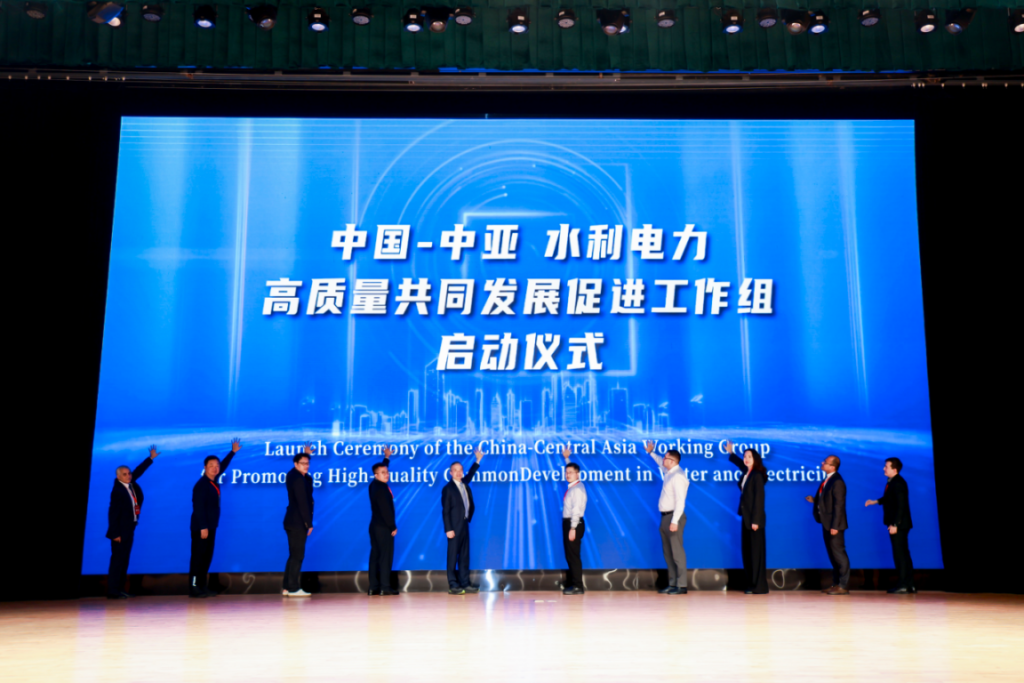
The forum in Tashkent, Uzbekistan, was organized under the theme “China-Central Asia: High-Quality Belt and Road Cooperation and Green, Innovation-Driven Development.” It brought together regional experts to examine green transformation, sustainable development, digital connectivity, innovative industrial value chains, and the alignment of national development strategies.
In Addis Ababa, Ethiopia, discussions concentrated on exchanges of experience and practical approaches to poverty reduction in China and Africa. The agenda highlighted the relevance of development policies, institutional capacity, and locally adapted approaches to improving livelihoods and economic opportunities.
The thematic forum in Athens, Greece, addressed the continuity of civilizational traditions and the promotion of civilizational innovation. It examined intercultural dialogue, the interpretation of contemporary Chinese thought, and the role of translation and academic exchange in strengthening mutual understanding.
In Budapest, Hungary, the forum focused on mutual trust, connectivity, shared development, and mutually beneficial China-Europe cooperation. Participants explored Chinese modernization, global initiatives, and the prospects for continued economic and intellectual engagement between China and European countries.
The forum in Montevideo, Uruguay, examined cooperation between China, Latin America, and the Caribbean in advancing modernization and building a community with a shared future. Its regional focus reflected the growing importance of development partnerships between China and Latin American economies.
Taken together, these thematic forums illustrate an important characteristic of China’s contemporary international engagement: the adaptation of a common conceptual framework to diverse regional development agendas.
In Central Asia, cooperation is closely associated with connectivity, industrial modernization, and green development. In Africa, poverty reduction and development capacity remain prominent concerns. In Europe, economic cooperation, institutional dialogue, and mutual understanding acquire particular importance, while Latin American discussions reflect the broader agenda of modernization and development partnerships.
This differentiated approach is analytically significant because the practical relevance of international initiatives depends on their ability to respond to the priorities, institutional capacities, and economic conditions of individual partner countries.
From Academic Dialogue to Institutionalized Research Cooperation
Another significant outcome of the Forum was the introduction of new mechanisms intended to support long-term international research cooperation.
Four developments were announced during the event:
These developments indicate an effort to move beyond periodic conferences towards more systematic and sustained academic engagement.
The expansion of research networks, access to primary materials, multilingual publications, and opportunities for academic mobility can strengthen the institutional foundations of international China studies.
The scale of the Forum also reflects this development. According to the organizers, the 2025 edition involved approximately 200 participants from 35 countries and regions. The 2026 edition expanded both its reported participation and geographical format.
However, the expansion of academic platforms should not automatically be interpreted as evidence of uniform international scholarly consensus.
International China studies remain diverse, encompassing different theoretical traditions, methodological approaches, and assessments of China’s domestic and international policies.
The long-term academic value of these new mechanisms will depend on their capacity to support rigorous research, comparative analysis, evidence-based assessments, and meaningful exchanges among researchers representing different national and intellectual perspectives.
Central Asia in China’s Emerging Development Agenda
For Central Asia, the Forum’s agenda is particularly relevant in light of the evolving nature of cooperation with China.
Since the announcement of the Silk Road Economic Belt in Kazakhstan in 2013, China-Central Asia cooperation has developed from a predominantly infrastructure- and trade-oriented relationship into a broader framework encompassing industrial investment, agriculture, energy, digital technologies, education, and environmental sustainability.
The second China-Central Asia Summit, held in Astana in June 2025, further advanced this multidimensional agenda.
The strategic question for Central Asian countries is increasingly not whether cooperation with China should expand, but how its expansion can contribute more effectively to national development objectives.
The region’s geographical position creates significant opportunities for transport connectivity and participation in international supply chains. Nevertheless, geographical advantages alone do not guarantee economic diversification or technological advancement.
The transformation of transit potential into long-term economic benefits requires complementary investments in manufacturing, logistics services, agricultural processing, digital infrastructure, professional training, and local entrepreneurship.
Equally important are environmental sustainability and resource security. Industrial growth and infrastructure development must be accompanied by attention to energy efficiency, water resources, ecological protection, and climate resilience.
The Tashkent thematic forum’s emphasis on green development, innovation, and the alignment of national strategies is therefore particularly relevant to the next stage of China-Central Asia cooperation.
For Kazakhstan, these priorities correspond to the broader national objective of developing a diversified, technologically advanced, and competitive economy.
The effectiveness of cooperation should increasingly be assessed through its contribution to domestic productive capacity, non-resource exports, skilled employment, and sustainable regional development.
Kazakhstan’s Perspective: From Corridors to Communities
During one of the Beijing Forum’s parallel sessions, G.Shaimergenova, Director of the China Studies Center, delivered a presentation entitled “From Corridors to Communities: China-Central Asia Connectivity and the Path to Shared Development.” The presentation examined the relationship between international transport connectivity and local economic development, emphasizing the importance of transforming infrastructure investments into broader economic opportunities for regions, enterprises, and communities.
From Connectivity to Development Impact
One of the central analytical challenges facing China-Central Asia cooperation is the need to develop a more comprehensive understanding of connectivity.
Transport corridors are essential instruments of regional integration. They can reduce trade costs, improve delivery times, connect previously underserved territories, and expand access to international markets.
However, infrastructure development and economic development are not synonymous.
A transport corridor may demonstrate significant growth in freight volumes without generating comparable improvements in local production, employment, or enterprise development.
The economic value retained within participating countries depends on how effectively international infrastructure is integrated into domestic industrial systems, regional markets, and local supply chains.
For Kazakhstan, the development of logistics hubs, cross-border railway connections, and the Trans-Caspian International Transport Route provides opportunities not only to strengthen its position in Eurasian transport networks but also to create new sources of domestic economic growth.
Realizing these opportunities requires coordinated regional development policies, reliable infrastructure services, competitive local enterprises, access to financing, and investment in human capital.
An important research direction is therefore the assessment of local development multipliers: the additional economic and social benefits generated when major infrastructure projects stimulate surrounding industries, services, employment, and technological capabilities.
Such an approach would make it possible to evaluate connectivity projects through a broader set of indicators, including local value creation, SME participation, export diversification, workforce development, and environmental sustainability.
It would also provide a stronger empirical foundation for assessing the practical contribution of international cooperation to national development objectives.
The Strategic Significance of Academic Cooperation
The growing complexity of China-Central Asia relations increases the importance of specialized research institutions and independent analytical expertise.
Understanding contemporary China requires sustained attention to its domestic policy evolution, economic transformation, technological development, and changing approaches to international cooperation.
At the same time, research on China-Central Asia relations should extend beyond the interpretation of Chinese policy documents and the monitoring of bilateral agreements.
It should examine implementation mechanisms, economic outcomes, institutional constraints, and the distribution of development benefits.
For Central Asian research institutions, cooperation with Chinese academic organizations provides opportunities to strengthen access to primary sources, expand comparative research, and develop joint analytical methodologies.
Research priorities could include the economic impact of Belt and Road projects, regional industrial value chains, digital transformation, green development, water and energy security, and the socioeconomic effects of cross-border infrastructure.
Such cooperation can be particularly productive when research agendas reflect the interests and priorities of both sides and combine Chinese expertise with the knowledge of local economic and institutional conditions available within Central Asia.
The China Studies Center considers international academic platforms an important opportunity to contribute Kazakhstan’s perspective to these discussions and to strengthen research-based approaches to regional cooperation.
The 2026 CASS International Forum demonstrated the growing scale and institutional development of international academic engagement with contemporary Chinese thought, modernization, and global governance.
Its regional thematic discussions also highlighted the importance of connecting broader international concepts with specific development challenges and national priorities.
For Kazakhstan and Central Asia, the significance of this agenda lies in the opportunity to examine how cooperation with China can evolve from physical connectivity towards industrial modernization, technological development, environmental sustainability, and stronger local economies.
The next stage of regional cooperation will require not only new infrastructure and investment projects but also more sophisticated analytical tools capable of evaluating their long-term development effects.
Ultimately, the practical significance of shared development will depend on the ability of international cooperation to generate sustainable economic opportunities while respecting the national interests, development priorities, and institutional diversity of participating countries.
From this perspective, continued academic dialogue between China and Central Asia is not merely an instrument of mutual understanding. It is also an important resource for developing more effective, balanced, and evidence-based approaches to regional cooperation.
China Studies Center