This year, the Communist Party of China marks the 105th anniversary of its founding. Its emergence came during one of the most difficult periods in Chinese history, when the country faced internal instability, weak state institutions, economic backwardness, and severe external pressure. Under these conditions, a political organization emerged that later became a key factor in China’s transformation and the change of its historical path.
Over the past century, the CPC has grown from a small group of several dozen people into the world’s largest ruling party, bringing together more than 100 million members and over 5.4 million primary-level organizations. Under its leadership, China has been transformed from a poor agrarian country into one of the world’s leading economies. In a relatively short historical period, industrialization was carried out, and sustained economic growth and social stability were ensured.
One of the key features of the Chinese model has been the development of socialism with Chinese characteristics, an approach that combines the basic principles of Marxism with China’s national conditions and cultural traditions. This has made it possible to build its own model of modernization and make development more manageable. Throughout its history, the Party has adapted its theoretical foundation to changing conditions, from Mao Zedong’s ideas to the modern system of theories of socialism with Chinese characteristics.
An important element of Party practice remains its focus on the population. Social policy is regarded as a central area of activity: China implemented the largest program in history to eliminate absolute poverty, and also adopted large-scale measures to protect the population during the COVID-19 pandemic. At the same time, the systems of education, healthcare, social security, and housing policy are being developed.
Reforms and the policy of opening up to the outside world have played a significant role in the country’s development. From the creation of special economic zones and accession to the World Trade Organization to the promotion of the Belt and Road Initiative and the formation of free trade zones, China has been steadily integrating into the global economy. In recent years, the emphasis has shifted to innovative development, the growth of new drivers of growth, and the transition to a green, low-carbon economy.
The CPC also pays considerable attention to internal governance. Strengthening Party discipline and combating corruption are seen as the most important conditions for the stability of the political system. In this regard, a policy of zero tolerance for corruption is being implemented across all levels of government.
In foreign policy, China positions itself as a supporter of peaceful development and multilateral cooperation. It emphasizes its commitment to international law, the central role of the UN, and the principle of sovereign equality of states. China opposes unilateral actions, bloc confrontation, and power politics.
In response to contemporary global challenges, a number of international initiatives have been put forward, including the concept of a community with a shared future for mankind, as well as initiatives in the areas of global development, security, civilizational dialogue, and the improvement of global governance. These approaches are aimed at increasing the resilience of the international system and strengthening the role of developing countries.
Economically, China remains one of the key drivers of global growth: in 2021-2025, its contribution to the world economy was about 30%. The country is the largest trading partner of more than 160 states and advocates an open world economy, including through the implementation of the Belt and Road Initiative.
At the regional level, these approaches find practical expression in the development of ties with neighboring countries. Kazakhstan occupies a special place in China’s foreign policy as the largest partner in Central Asia and a key link in the Belt and Road Initiative. Over 34 years of diplomatic relations, a stable strategic partnership has been formed.
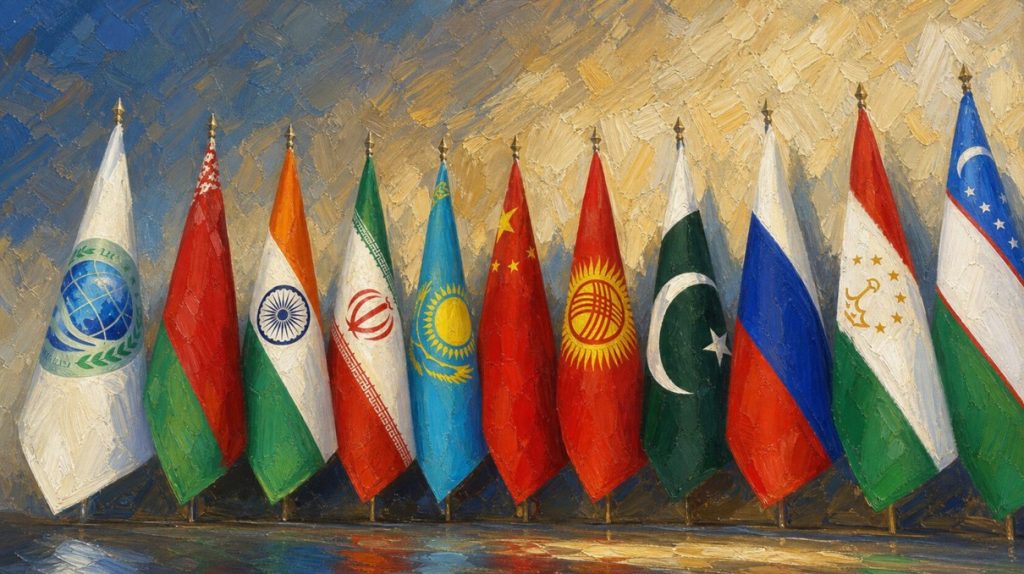
In recent years, there has been an intensification of political dialogue at the highest level. Reciprocal visits by the leaders of the two countries have taken place, including participation in the China-Central Asia summit and events within the framework of the SCO. Agreements have been reached to expand cooperation in trade, investment, energy, transport, and high technologies.
Economic interaction is showing steady momentum. In 2025, trade turnover reached 48.7 billion US dollars (an increase of 11%), and in January-May 2026 it amounted to 21.99 billion dollars (an increase of 26.8% year on year). Kazakhstan retains its status as China’s largest trading partner in Central Asia.
Cooperation covers both traditional sectors – energy, mineral resources, infrastructure, and logistics – and new areas, including automotive manufacturing, agriculture, green energy, and information technology.
Humanitarian ties are also developing actively. The introduction of a visa-free regime has contributed to growth in mutual travel by citizens, and the flow through the Khorgos International Center of Boundary Cooperation reaches nearly 30,000 people per day. Cooperation in education, science, sports, and tourism is expanding.
At the current stage, both countries are implementing large-scale national development programs: China – modernization goals through 2035, and Kazakhstan – the course toward building a “Just Kazakhstan.” This creates additional opportunities for aligning strategies and deepening the partnership.
The Chinese side states its readiness to further expand interaction with Kazakhstan – from interparty dialogue and the exchange of public administration experience to practical cooperation in the economy, science, technology, and humanitarian sphere, including the development of projects within the framework of the Belt and Road Initiative.
The evolution of the Communist Party of China and its role in transforming the country represent one of the most illustrative examples of adapting a political system to the tasks of modernization. The Chinese experience shows that modernization is not only economic growth or technological development, but also a comprehensive process that includes strategic planning, institutional resilience, political continuity, a focus on public interests, and the ability to carry out continuous reforms.
For Kazakhstan, this experience is of practical interest primarily from the perspective of understanding the mechanisms of long-term development, improving the effectiveness of public administration, and coordinating priorities. This is not about borrowing ready-made models, but about a deeper analysis of approaches that can be adapted taking national specifics into account.
Of particular importance in this context is Kazakhstan-China cooperation. The foundation of trust and strategic partnership built over years of interaction creates conditions for further expansion of cooperation in trade, investment, energy, transport, education, science, and the humanitarian sphere. Strengthening expert dialogue on modernization and public administration can become an important factor in reinforcing mutual understanding and finding new areas of sustainable and mutually beneficial cooperation.
China Studies Center