
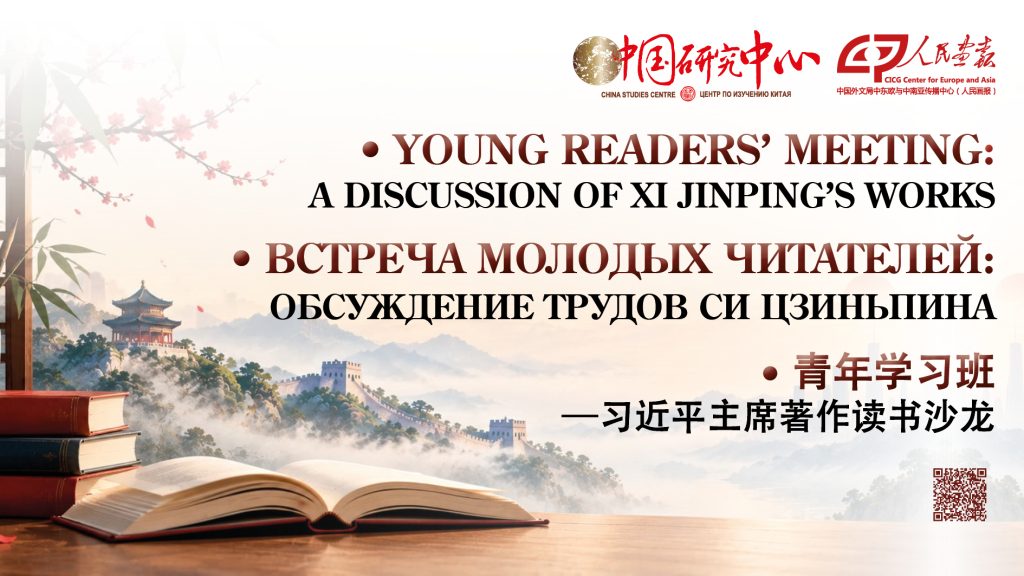

This volume covers the period from May 27, 2022, to December 20, 2024, and includes 91 works by General Secretary of the CPC Central Committee Xi Jinping, organized into 18 thematic sections. This edition captures a historically significant moment — beginning with the 20th National Congress of the Communist Party of China, which outlined the strategic direction for the new era. In this context, the volume not only continues the political and ideological line of the previous editions but also marks a shift toward the practical implementation of Chinese modernization in the face of global challenges.
For Kazakhstani readers, this book offers a unique window into the political thinking of contemporary China — a country with which Kazakhstan is building increasingly deeper bilateral and multilateral relations. This volume holds particular value for civil servants, scholars, students studying China, and all those interested in strategic governance, reform, international initiatives, and party building.
One of the distinguishing features of the fifth volume is its scale and thematic diversity. The topics span virtually all key aspects of state governance: from constructing a new development model to matters of culture, law, defense, security, public well-being, and international relations. Each of the 18 themes presents the Chinese leadership’s holistic vision of national priorities and the paths to achieving them.
The book provides insight into how China approaches issues of sustainable growth, the strengthening of Party leadership, social stability, environmental responsibility, and technological independence. At the same time, its emphasis on inclusivity, national identity, and historical mission lends these processes a particular ideological depth. It is important to emphasize that throughout these materials, Xi Jinping views governance as a long-term strategic task requiring systematization, discipline, and collective responsibility.
Special attention in this edition is given to China’s foreign policy positions, including the Belt and Road Initiative, the strengthening of multilateral cooperation, and the shaping of a fair international order. As a close partner of China, Kazakhstan can gain a deeper understanding of the motivations and approaches of Chinese diplomacy and apply this knowledge in the creation of mutually beneficial projects within the framework of Eurasian integration.
The fifth volume is also notable in that it is not merely a collection of official speeches. It is a cohesive conceptual text that reflects Xi Jinping’s leadership style, his way of thinking, and his consistent approach to problem-solving — from global challenges to concrete tasks of internal transformation. For Kazakhstan, which is also undergoing profound institutional and political reforms aimed at building a new model of statehood and realizing the concept of a “Just Kazakhstan,” China’s experience may serve as a source of observation, comparison, and formulation of national solutions rooted in local context.
Thus, the fifth volume of “Xi Jinping: The Governance of China” is not simply a political document. It is a guide to understanding how China envisions its future, governs its present, and engages with the world. For Kazakhstani readers, this edition offers value as a source of political analysis and as a tool for intergovernmental dialogue.
China Studies Center