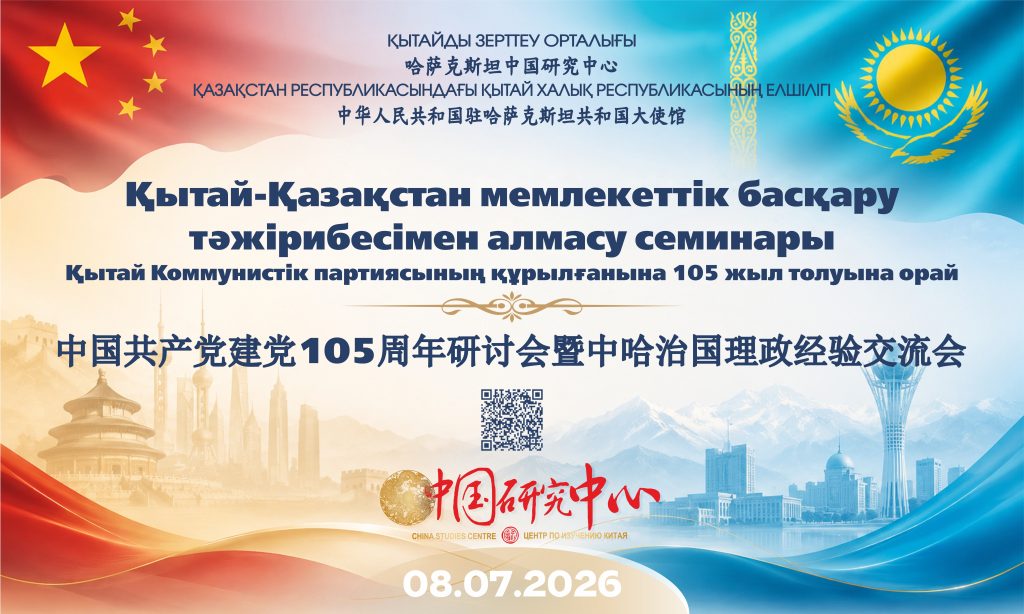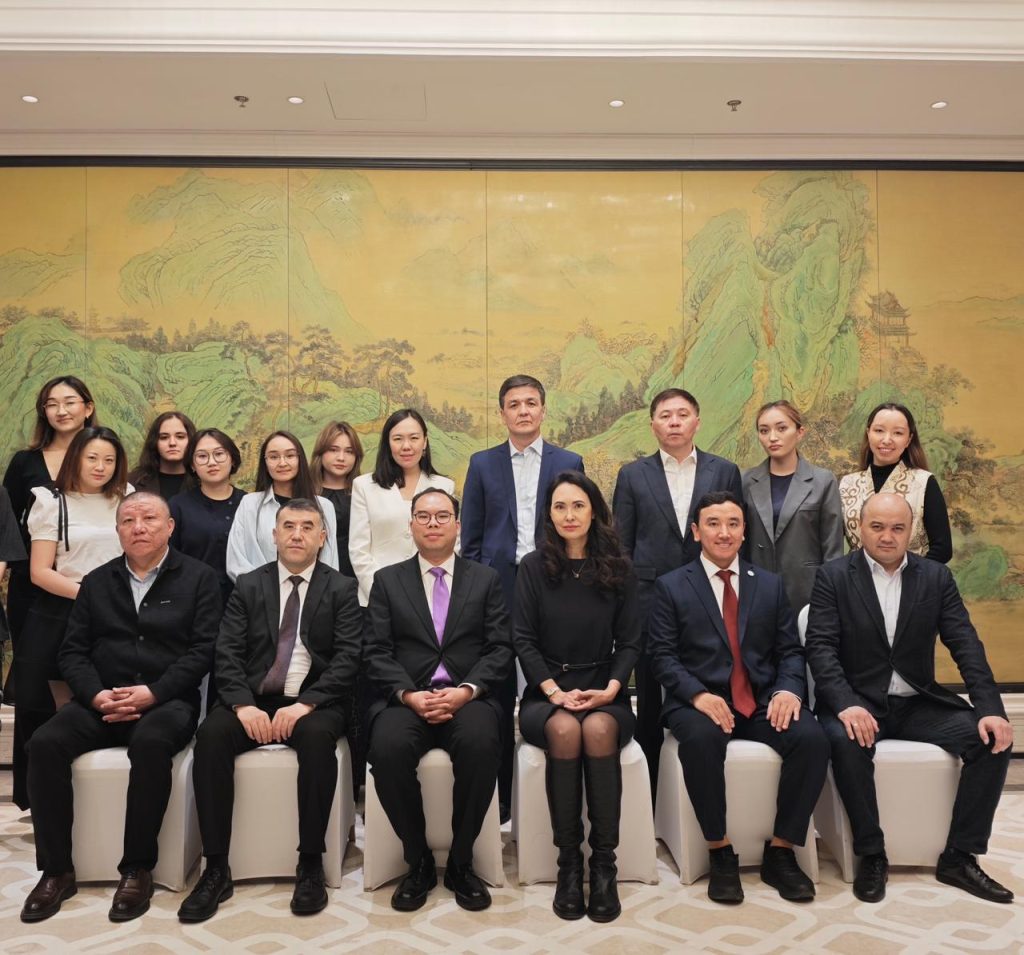
On April 10, 2026, a seminar of the China Studies Center titled “Modern China: Questions and Answers” was held in Astana on the topic “The ‘Two Sessions’ of 2026: China’s Development Priorities and Prospects for Cooperation with Kazakhstan and Central Asia.” The seminar discussed the key outcomes of China’s 14th Five-Year Plan, new priorities of the PRC’s socio-economic policy, and their significance for Kazakhstan and the countries of Central Asia. Particular attention was given to aligning China’s 15th Five-Year Plan with the priority areas and initiatives of economic development in Kazakhstan and the region.
Opening the seminar, Gulnar Shaimergenova, Director of the China Studies Center, noted that the presentation sets a strategic framework for discussing the results of China’s 14th Five-Year Plan and the priorities of the 15th Five-Year Plan, emphasizing the transition from quantitative growth to high-quality development based on innovation, digitalization, green economy, and technological self-reliance. The resilience of the Chinese economy was highlighted, including GDP growth at around 5% and the preservation of its leading position in global industry despite external challenges.
The main emphasis was placed on the fact that the new Five-Year Plan shapes a long-term modernization strategy that will influence not only China’s domestic policy but also global and Eurasian processes. For Kazakhstan and the countries of Central Asia, this opens significant opportunities ranging from industrial cooperation and logistics to digital and green transformation.
An important element of the speech was its alignment with the position of President Kassym-Jomart Tokayev on a new stage of Kazakhstan-China partnership, as well as a call for practice-oriented analysis and the development of concrete cooperation mechanisms. The seminar was positioned as a platform for developing applied solutions and strengthening expert dialogue.
Cheng Kefan, Counsellor-Minister of the Embassy of the PRC in the Republic of Kazakhstan, expressed his gratitude to the China Studies Center for the invitation to participate in the seminar, noting that such platforms for intensive exchange of views provide an opportunity to better understand China’s development through the lens of the “Two Sessions” and to discuss the prospects for China-Kazakhstan cooperation. He emphasized that such dialogue is timely and of significant practical importance.
In his remarks, Cheng Kefan drew attention to the two major political sessions held in Beijing in March – the Fourth Session of the 14th National People’s Congress and the Fourth Session of the 14th National Committee of the Chinese People’s Political Consultative Conference – which attracted wide international attention. According to him, the international community is increasingly moving beyond the role of a passive observer and becoming an active researcher, seeking not only to identify challenges but also to find answers, striving to better understand the specifics of China’s governance model and to perceive modern China in all its complexity.
The Counsellor-Minister focused on explaining the logic of China’s development through the “Two Sessions” as a key political and institutional mechanism. He highlighted the transition to a higher-quality growth model, the strengthening of innovation and social policy, and China’s intention to play a more active and stabilizing role on the international stage. It was emphasized that China’s current strategic priorities shape both its domestic agenda and create new opportunities for external partners.
Four key areas were identified for analyzing the outcomes of the “Two Sessions” and China’s contemporary development:
Ikboljon Koraboev, Director of the Center for Global and Regional Governance (CEGREG) and Professor of International Relations at Maqsut Narikbayev University, presented an analytical perspective on the significance of China’s 15th Five-Year Plan for Central Asian countries, focusing on the interconnection between two key areas – critical minerals and transport and logistics connectivity. He noted that in China’s new strategy, openness and security are viewed as complementary elements, while the Belt and Road Initiative is gaining additional momentum through transport integration projects such as the Trans-Caspian route and the China-Kyrgyzstan-Uzbekistan railway. Particular attention was given to the growing importance of critical minerals as a key factor in global competition and economic transformation, with Central Asia seen not only as a resource base but also as a potential participant in value-added chains. The speaker emphasized that the key task for the region is to develop cooperation models with China that contribute to industrialization, technological development, and economic sovereignty.
Yerlan Kudys, PhD, Professor at L.N. Gumilyov Eurasian National University, presented an analysis of China’s 15th Five-Year Plan (2026-2030) in the context of its alignment with the economic development of Kazakhstan and Central Asia. He highlighted China’s transition to a higher-quality growth model based on productivity gains, digital economy development, and green finance, and underscored the potential for strategic synergy in logistics, energy, and cross-border cooperation. Key recommendations included adapting international digital standards, developing green finance instruments within the AIFC, establishing specialized digital logistics zones, and strengthening multilateral coordination, including early warning mechanisms for risk mitigation. Overall, the emphasis was placed on transitioning toward a more institutionalized, financially resilient, and technologically integrated model of regional cooperation.
Zhamaladen Ibragimov, Doctor of Law and Professor of the Department of Constitutional and Civil Law at L.N. Gumilyov Eurasian National University, noted in his remarks that the “Two Sessions” of 2026 serve as a key mechanism for shaping China’s strategic development course, combining legislative and consultative functions and ensuring the transformation of public initiatives into state decisions. He highlighted China’s role as one of the centers of global economic stability, as well as the importance of the “Two Sessions” in shaping the international agenda and deepening cooperation with Kazakhstan and Central Asian countries. In practical terms, he emphasized the need for Kazakhstan to move from basic cooperation toward deeper strategic engagement with China, including the development of joint scientific and technological centers, expanded participation in transport and logistics chains, attracting investments not only in raw materials but also in processing and manufacturing, and more active use of the Belt and Road Initiative. Additional proposals included advancing projects in digital economy, artificial intelligence, and green energy, establishing IT hubs and logistics centers, and expanding educational and scientific exchanges to enhance regional integration and value creation.
Dilorum Sultamuratova, representing the International Center for Green Technologies and Investment Projects, presented the current state and prospects for the development of green technologies in Kazakhstan, noting the formation of a systematic support infrastructure through a registry covering dozens of projects and solutions in environmental and sustainability fields. Particular attention was given to key environmental challenges such as air pollution, land degradation, and water resource contamination, as well as the need to implement technologies in areas such as renewable energy, energy efficiency, waste management, and environmental monitoring. The importance of international cooperation, including partnerships with China, was emphasized as a driver of technology transfer and investment attraction. The presentation also outlined practical priorities, including strengthening the commercialization of green technologies, expanding financing mechanisms, supporting startups and SMEs, localizing the production of environmental equipment, developing sustainable innovation ecosystems, and further integrating Kazakhstan into the global green agenda.
Baurzhan Tleumetov, Director of the Beijing Language and Culture University (BLCU) branch in Kazakhstan at Astana International University, emphasized that China’s 15th Five-Year Plan represents a transition toward a more complex and technology-driven economic model, where digitalization, artificial intelligence, and advanced industrial solutions play a central role. In this context, he stressed that for Kazakhstan, engagement with China is directly linked to the quality of human capital, as the high level of trade and economic interdependence makes the кадровый factor critically important. According to the speaker, the key challenge is not the shortage of Chinese-speaking specialists, but the lack of professionals capable of operating at the intersection of language, technology, and business processes. He noted that the modern economic environment requires not only linguistic skills but also a deep understanding of sectoral processes, including logistics, trade, digital platforms, and international standards.
As practical steps, he proposed a shift toward sector-specific language training, earlier involvement of business and government institutions in the educational process through real-case engagement, and the development of short-term programs and micro-qualifications to better respond to market needs. He also emphasized the importance of positioning Kazakhstan as an educational hub for Central Asia in cooperation with China, as well as revising performance metrics in education to focus on practical competencies and integration of graduates into real economic sectors. Overall, the recommendations are aimed at developing applied, interdisciplinary human capital capable of operating effectively in the context of deepening economic integration with China.
In his concluding remarks, Ulan Nukhitzhan, Senior Researcher of the “Country Priorities of Kazakhstan’s Foreign Policy” group at the Institute for Foreign Policy Studies under the Ministry of Foreign Affairs of Kazakhstan, noted that the presentations collectively reflect a transition to a new stage of engagement with China, where not only macroeconomic priorities and strategic frameworks matter, but also practical mechanisms for their implementation. The overall conclusion highlighted that China’s 15th Five-Year Plan sets a course toward economic complexity, technological modernization, and sustainable development, opening new opportunities for Kazakhstan and Central Asian countries. At the same time, effective use of these opportunities requires modernization of the institutional framework, deeper cooperation, a shift toward value-added production within the region, and the development of a new level of human capital capable of operating at the intersection of languages, technologies, and sectoral processes.
Summarizing the seminar, Gulnar Shaimergenova, Director of the China Studies Center, noted that the discussion confirmed the strategic importance of the 2026 “Two Sessions” as a key reference point for building long-term and mutually beneficial cooperation between Kazakhstan, China, and the countries of Central Asia. The approaches and practical proposals presented by the experts demonstrated a strong potential for aligning development priorities, particularly in trade, investment, logistics, industrial cooperation, and human capital development, opening new opportunities for enhancing the region’s competitiveness and sustainable growth. The outcomes provide a solid foundation for further expert dialogue and the advancement of concrete joint initiatives.
The “Modern China: Questions and Answers” series, initiated by the China Studies Center, serves as a platform for open and substantive dialogue among experts, diplomats, and the broader public. Its goal is to deepen understanding of trends in China’s politics, economy, culture, and international initiatives, and to promote constructive cooperation between Kazakhstan, Central Asian countries, and China in the spirit of good-neighborliness and strategic partnership.
China Studies Center