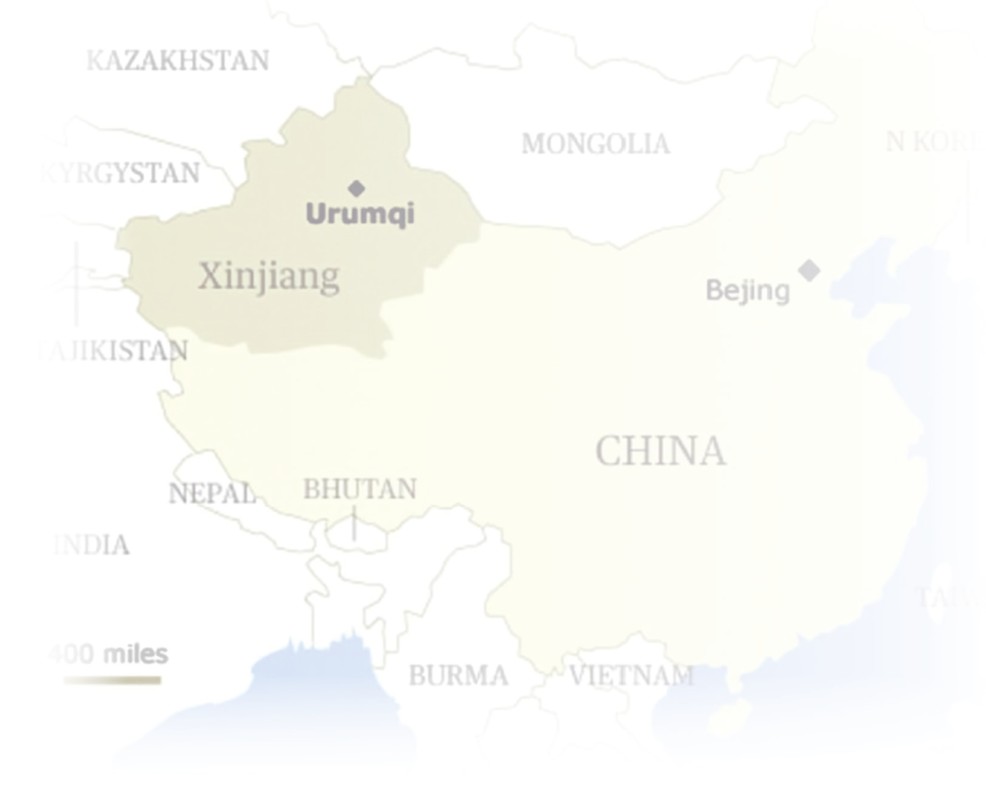
Kazakhstan-China interaction with the Xinjiang Uygur Autonomous Region of the PRC is today becoming increasingly systematic and multifaceted. Its development is determined not only by geographic proximity and historically established ties, but also by a growing understanding of shared practical interests in trade, logistics, industrial cooperation, and regional development. In this context, Kazakhstan’s cooperation with the XUAR is becoming one of the most dynamic and promising areas of the bilateral agenda.
For Kazakhstan, the XUAR is of special importance as China’s border region through which a significant part of trade, economic, transit, and investment interaction between the two countries passes. Its role goes beyond the regional dimension: Xinjiang in fact serves as an important link between Kazakhstan, China’s domestic markets, and the broader space of Eurasian economic cooperation.
To understand the logic of these relations means to see one of the key vectors of Kazakhstan’s economic strategy for the decade ahead.
Today the XUAR is Kazakhstan’s largest regional trade partner. It accounts for more than half of all Kazakhstan-China trade, which allows the autonomous region to be viewed not only as a transit corridor, but also as an independent, full-fledged economic partner.
If we look at trade dynamics, in 2025 Kazakhstan’s trade turnover with China reached $48.7 billion, according to the PRC Ministry of Commerce, up 11.2% compared with 2024, when this figure stood at $43.8 billion. At the same time, Kazakhstan’s trade directly with the XUAR amounted to $18.9 billion in 2025. These data can be seen not as a decline in the XUAR’s significance, but as the consolidation of cooperation at a new, more sustainable level after a period of rapid growth.
The PRC’s share in Kazakhstan’s foreign trade is approaching one quarter of the country’s total trade turnover, which in itself is a strategically important indicator. Kazakhstan, in turn, remains China’s top trading partner among Central Asian countries: it accounts for 46% of the PRC’s total trade with the region.
Such active trade dynamics are based not only on economic interest, but also on stable political dialogue at the highest level. It is the regular contacts between the leadership of Kazakhstan and China that create the necessary atmosphere of trust, predictability, and practical focus on results.
In July 2024, Xi Jinping paid a state visit to Astana, during which the leaders of the two countries formulated the concept of a “golden 30 years” – a strategic program for the development of relations over the next three decades. This was not just a protocol meeting, but a substantive political signal that China views Kazakhstan as a priority partner in Central Asia.
In June 2025, on the sidelines of the second China-Central Asia Summit in Astana, Xi Jinping and President Kassym-Jomart Tokayev once again reaffirmed the chosen course. The Chinese leader emphasized the PRC’s readiness, together with Kazakhstan, to make a greater contribution to peace and development in the region.
Over the past two years, Kazakhstan’s political and sectoral dialogue with the XUAR has noticeably intensified. Among the key results are the setting of a goal to double trade turnover, the launch of a trilateral Kazakhstan-XUAR-Hong Kong format to develop financial and investment mechanisms, as well as an agreement to develop a Roadmap for trade and economic cooperation. The current agenda gives special attention to expanding border crossing points, building the Ayagoz-Tacheng railway, and Kazakhstan’s participation in the China-Eurasia Expo in June 2026.
The practical basis of Kazakhstan’s cooperation with the XUAR is primarily formed by transport and logistics. It is infrastructure projects that today define the main framework of interaction: they require significant investment, have long-term importance, and directly affect the role of Kazakhstan and Xinjiang in Eurasian trade.
The two operating railway crossings, Dostyk-Alashankou and Altynkol-Khorgos, are working at the limit of their capacity and have in fact exhausted their throughput potential. This structural constraint dictates the need for accelerated development of transport infrastructure.
On the Moyynty-Dostyk section, construction of a second track is nearing completion, which in 2026 should increase capacity from 16 to 35 million tons per year.
On the Altynkol-Zhetygen route, 32 km of additional tracks are being built, which will raise the crossing’s capacity from 12 to 21 million tons annually.
Both projects are key elements in the implementation of the Belt and Road Initiative in Kazakhstan.
A fundamentally new solution will be the third cross-border railway crossing, Ayagoz-Tacheng. A memorandum on its construction was signed in 2023, and commissioning is scheduled for around 2027. This corridor will relieve congested nodes and diversify route networks between Central Asia and Xinjiang.
The results are already visible in the numbers. In 2025, freight turnover through Khorgos exceeded 46.4 million tons, the number of China-Europe container trains through this crossing reached 9,882, transit shipments through Kazakhstan as a whole increased by 6.6% and amounted to 36.9 million tons, and cargo flow through the Trans-Caspian International Transport Route increased by 36%. At the same time, the capacity of automobile border crossings was more than doubled – from 640,000 to 1.4 million vehicles per year.
As a result, Kazakhstan is gradually strengthening its position not merely as a transit country, but as a logistics hub influencing the configuration of Eurasian cargo flows.
Khorgos and special economic zones deserve particular attention. Today the Khorgos International Center of Boundary Cooperation is already moving beyond ordinary border trade and is gradually becoming an industrial-logistics platform where trade, warehousing, processing, services, and production converge. This is confirmed by concrete indicators: 41 investment projects worth 234.4 billion tenge are being implemented here, 8 of them have already been launched, and another 33 are planned for completion by 2027. In 2025, the number of visitors to the center doubled and reached 1.8 million people. New formats are also being developed, including the Eurasia Cross-Border Trade Center, and the opening of three new SEZs in Kazakhstan in 2025 strengthens the already existing Khorgos-Eastern Gate infrastructure.
That is precisely why Khorgos can be seen as one of the key elements of the new industrial agenda between Kazakhstan and the XUAR.
Industrial cooperation between Kazakhstan and the XUAR is still in its formative stage, but it is precisely this area that both sides see as the main reserve for long-term growth.
Energy deserves special mention. If earlier cooperation in this sphere was mainly associated with oil and traditional supplies, today the agenda is noticeably expanding toward green energy and new technologies. The Atasu-Alashankou oil pipeline still remains important for the stable export of Kazakh oil to China, but the renewable energy direction is becoming increasingly significant.
In 2026, Kazakhstan ratified an agreement with China to build four green power plants with a total value of $2 billion. This includes three wind farms and one solar plant, with launch scheduled for 2027-2029. In addition, in 2025 Kazakhstan had already commissioned nine renewable energy projects with the participation of Chinese investors.
This cooperation fits into Kazakhstan’s goal of achieving carbon neutrality by 2060 and at the same time responds to China’s demand for diversification of energy supplies within the Belt and Road framework. In this way, energy cooperation is taking on a more modern character, oriented toward long-term sustainable development.
The agro-industrial sector today demonstrates one of the strongest dynamics in Kazakhstan-China cooperation. If earlier shipments of Kazakh wheat to China were much more modest, in 2024 they grew to 1.36 million tons, and in 2025 Kazakhstan had already shipped 2.9 million tons of grain and feed flour, that is, 2.4 times more than a year earlier.
Overall exports of agricultural products reached $7 billion, up 36.9%. It is also important that Kazakhstan is gradually building mechanisms that help small and medium-sized farmers enter the Chinese market more sustainably. In April 2026, Kazakh companies signed agreements in China worth $125 million for oilseeds, dairy products, honey, and confectionery. The next important stage should be not only expanding raw material supplies, but also developing processing and promoting higher value-added products through joint projects in border areas.
Despite all the obvious achievements, it is important to see the tasks that still need to be solved. Kazakh exports to the XUAR still largely remain raw-material based, so the development of non-raw-material exports, processing, and industrial cooperation is of particular importance. No less important is the issue of railway crossing capacity: even with infrastructure modernization, investment must be synchronized on both sides of the border.
The financial and investment dimension is of particular importance. New formats, including the Kazakhstan-XUAR-Hong Kong link, can help build more convenient mechanisms for settlements, capital attraction, and the launch of joint production projects. A significant reserve is also associated with involving Kazakh small and medium-sized businesses in value chains, which would make it possible to move from simple trade to joint production.
Thus, Kazakhstan’s cooperation with the XUAR is reaching a more mature and substantive level. For Kazakhstan, Xinjiang is not only a neighboring region and an important transit corridor, but also a space through which a broader agenda of trade, logistics, investment, agro-industrial, and production cooperation is being formed.
From an expert perspective, the significance of the XUAR for Kazakhstan should be assessed not only through trade or transit volumes, but through its role in reshaping the very model of Kazakhstan-China economic interaction. Gradually, the priority is shifting from raw-material supplies and infrastructure connectivity to a more complex system of cooperation based on processing, industrial cooperation, participation of small and medium-sized businesses, financial instruments, and the joint creation of added value.
This is precisely the strategic meaning of Kazakhstan’s relations with the XUAR at the new stage. Their further development will depend not only on maintaining trade dynamics, but also on the ability of the parties to turn border interaction into a sustainable economic platform where transport infrastructure, agro-industrial potential, energy, investment, and production work as interconnected elements of long-term development.
China Studies Center